My New Favorite Puzzle: Tenth Root of 10 vs. Cube Root of 2
An illustrated walkthrough of comparing ¹⁰√10 and ³√2 by raising both to the 30th power (1000 vs. 1024), with more practice pairs.
Use this cartoon
Free for classrooms, worksheets, slides and other non-commercial use under CC BY-NC 4.0, with credit to Ben Orlin.
Cartoon by Ben Orlin, Math with Bad Drawings. https://cartoons.mathwithbaddrawings.com/2016-03-30-my-new-favorite-puzzle-tenth-root-of-10-vs-cube-root-of-2/ (CC BY-NC 4.0)Transcript
[1] "Here's a good puzzle I hadn't seen before…"
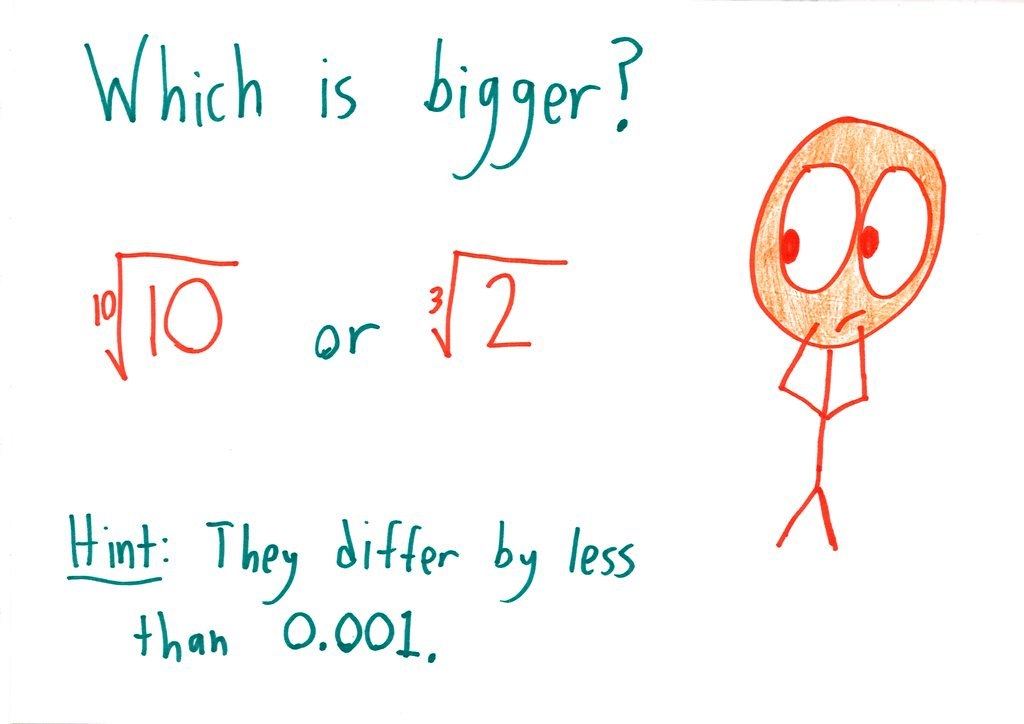
[2] "Which is bigger? ¹⁰√10 or ³√2. Hint: They differ by less than 0.001."
[3] "We need some sort of mathematical magnifying glass, some way to amplify tiny differences and make them visible… Warning: Solution in next image!"
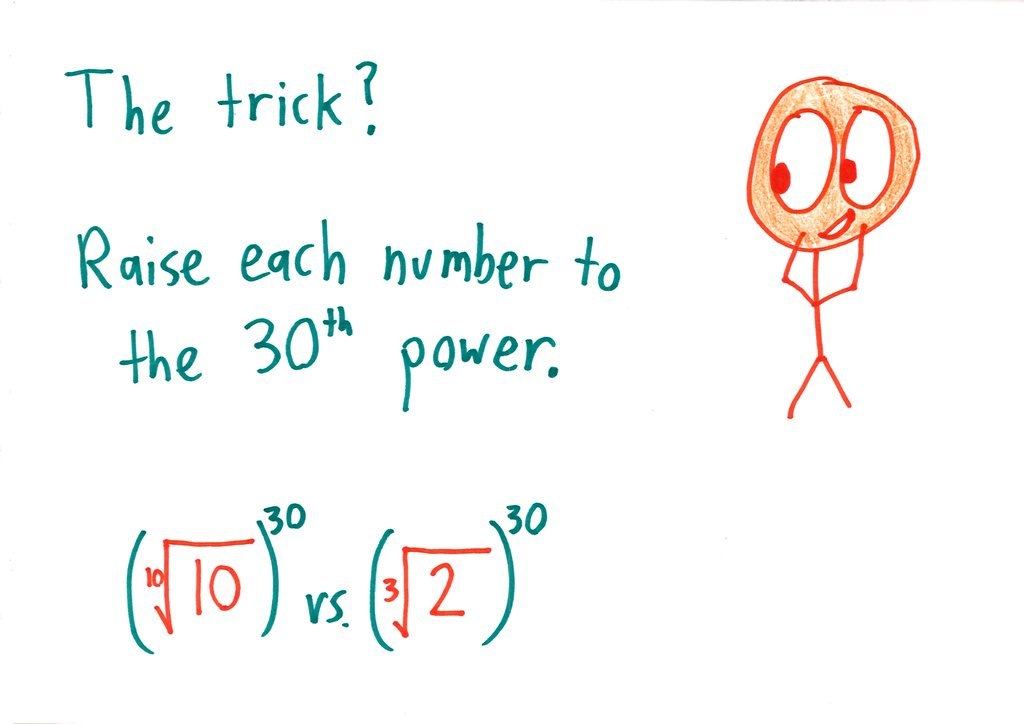
[4] "The trick? Raise each number to the 30th power. (¹⁰√10)³⁰ vs. (³√2)³⁰"
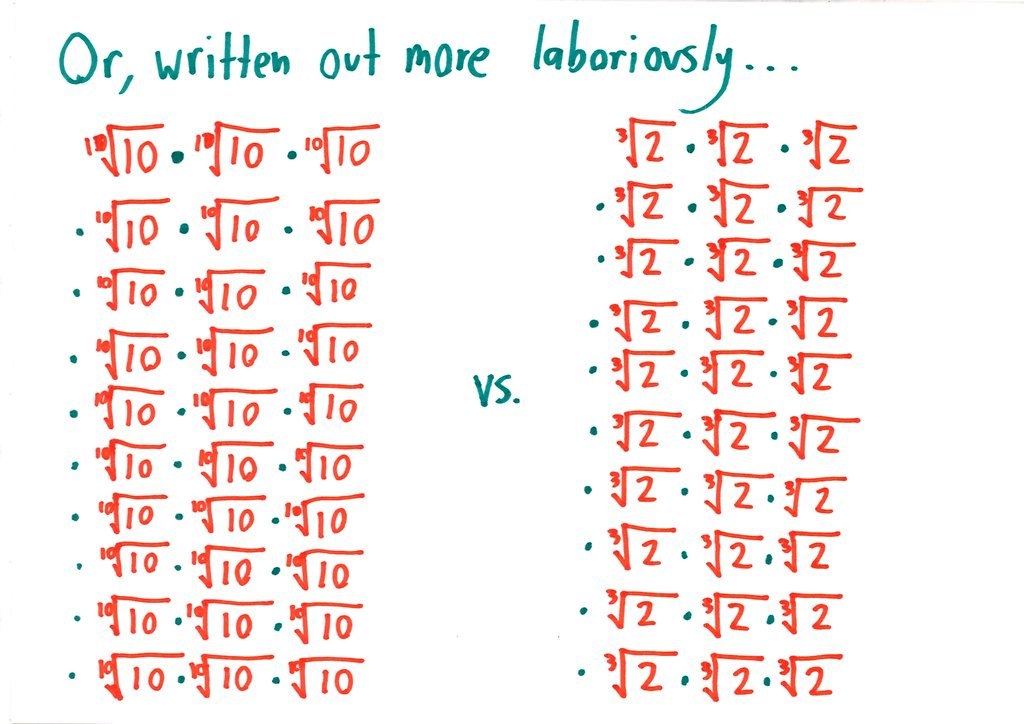
[5] "Or, written out more laboriously…" [30 copies of each multiplied]
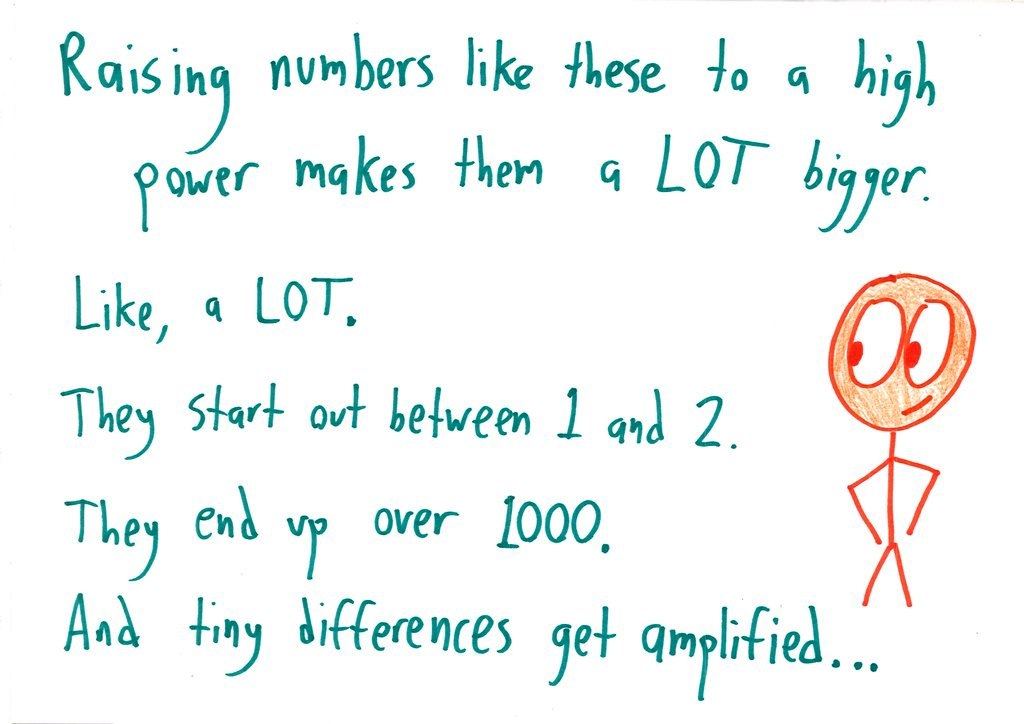
[6] "Raising numbers like these to a high power makes them a LOT bigger. Like, a LOT. They start out between 1 and 2. They end up over 1000. And tiny differences get amplified…"
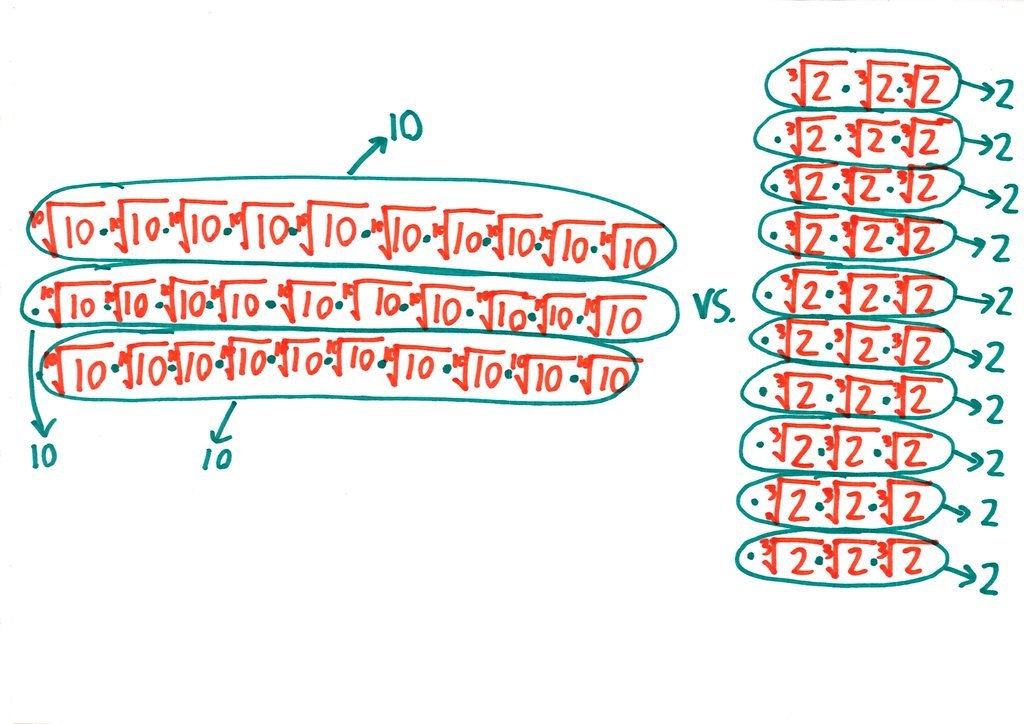
[7] [The 30 factors grouped: three groups of ten ¹⁰√10 (each = 10) vs. ten groups of three ³√2 (each = 2)]
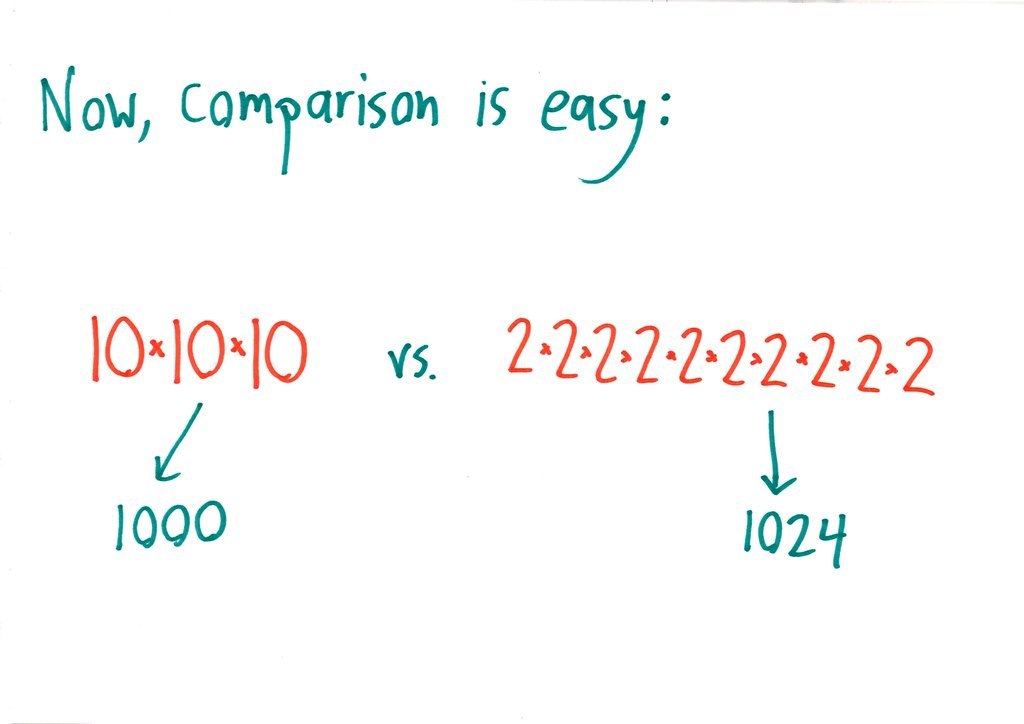
[8] "Now, comparison is easy: 10×10×10 vs. 2×2×2×2×2×2×2×2×2×2 → 1000 vs. 1024"
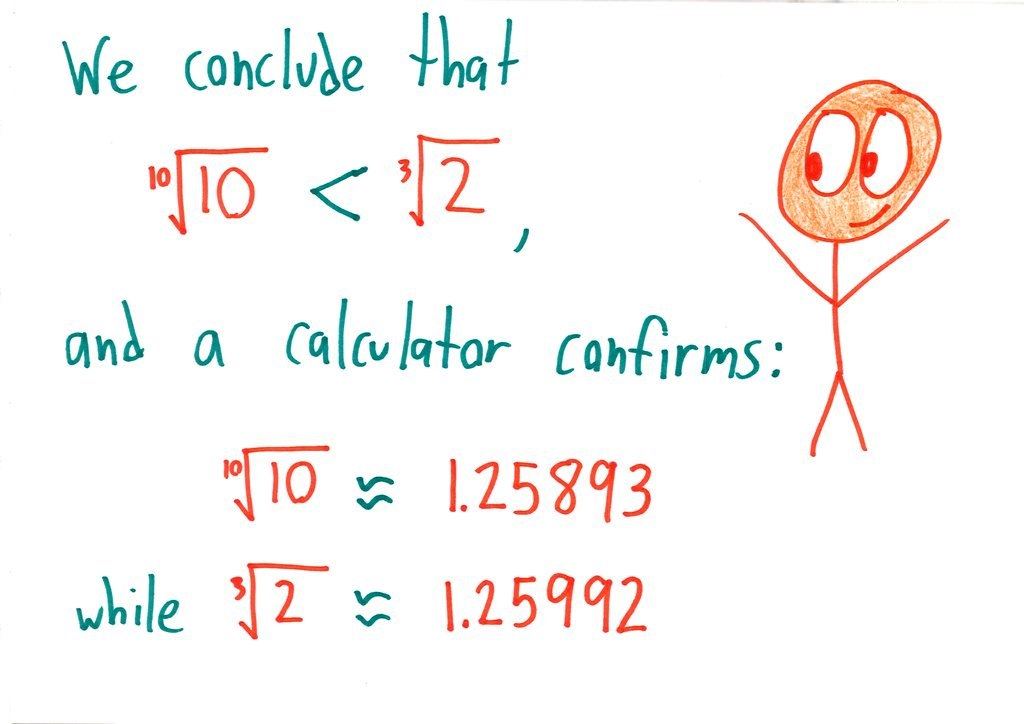
[9] "We conclude that ¹⁰√10 < ³√2, and a calculator confirms: ¹⁰√10 ≈ 1.25893 while ³√2 ≈ 1.25992"
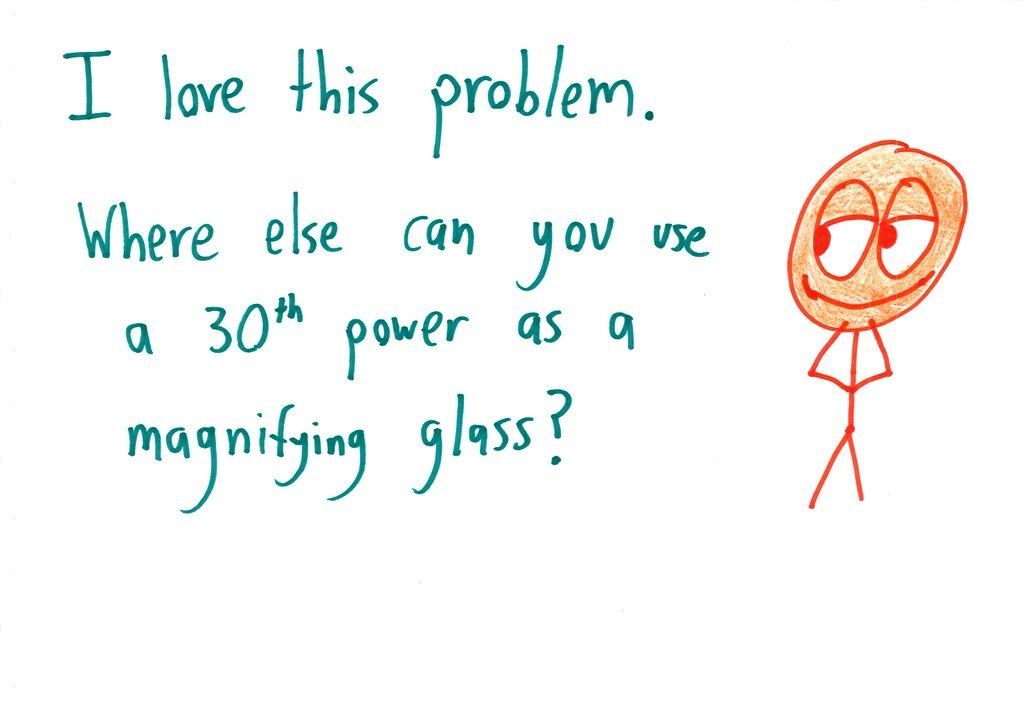
[10] "I love this problem. Where else can you use a 30th power as a magnifying glass?"
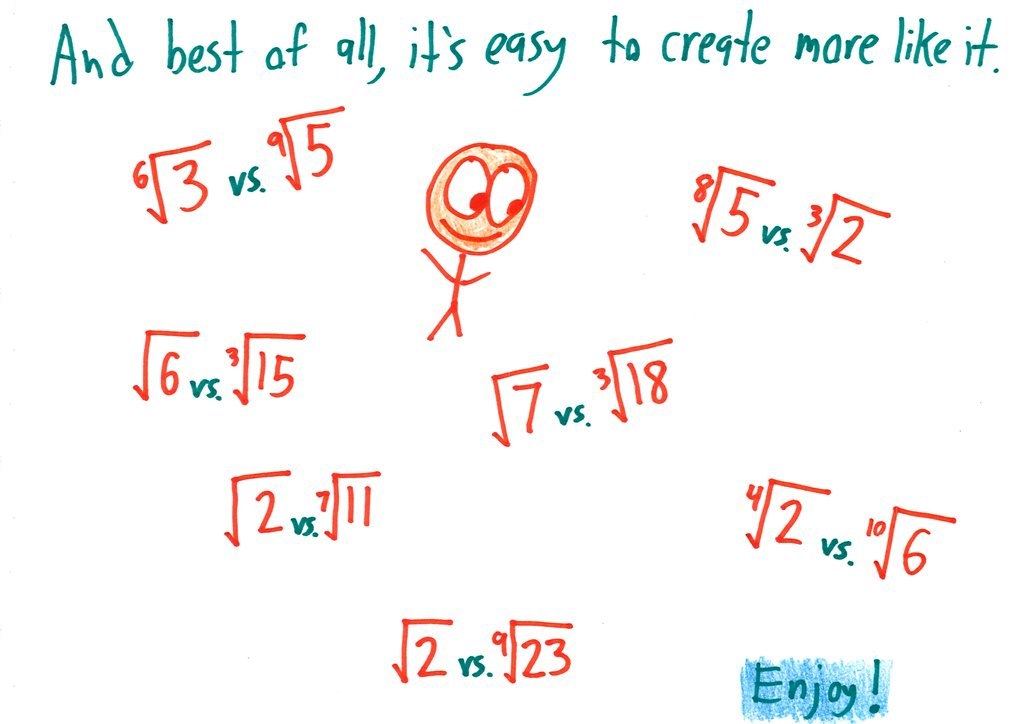
[11] "And best of all, it's easy to create more like it." ⁶√3 vs. ⁹√5 · ⁸√5 vs. ³√2 · √6 vs. ³√15 · √7 vs. ³√18 · √2 vs. ⁷√11 · ⁴√2 vs. ¹⁰√6 · √2 vs. ⁹√23 "Enjoy!"