An Accidental Fraction Brainbuster
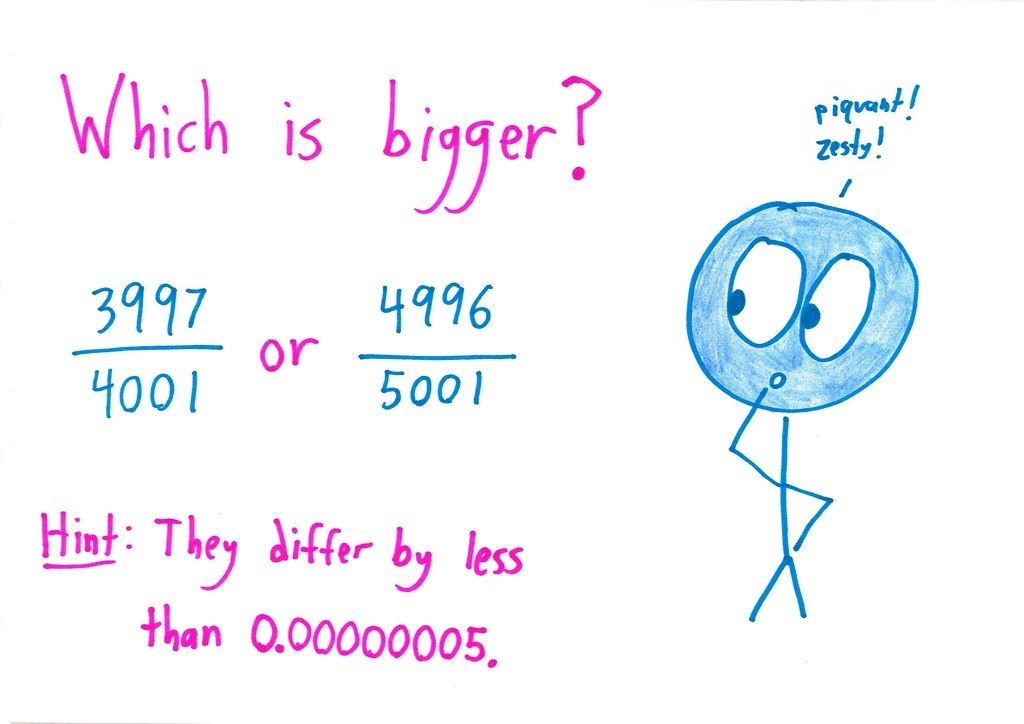
An illustrated walkthrough of comparing 3997/4001 and 4996/5001 by looking at the 'missing pieces' (each just shy of 1/1000), with more practice pairs.
Use this cartoon
Free for classrooms, worksheets, slides and other non-commercial use under CC BY-NC 4.0, with credit to Ben Orlin.
Cartoon by Ben Orlin, Math with Bad Drawings. https://cartoons.mathwithbaddrawings.com/2016-04-06-an-accidental-fraction-brainbuster/ (CC BY-NC 4.0)Transcript
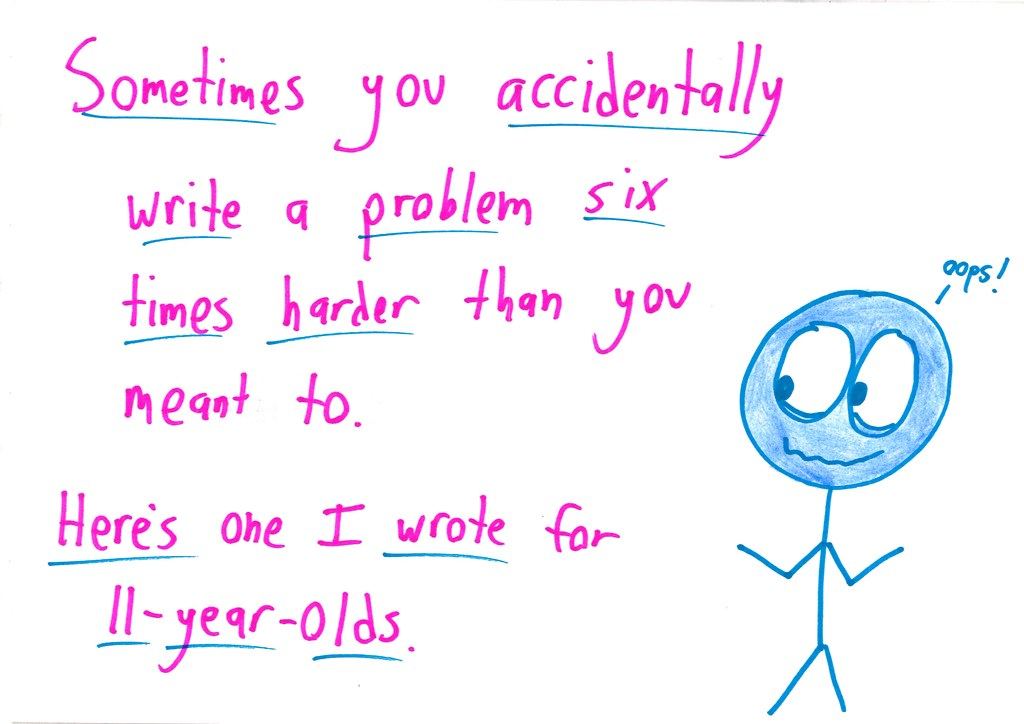
[1] "Sometimes you accidentally write a problem six times harder than you meant to. Here's one I wrote for 11-year-olds." ("oops!")
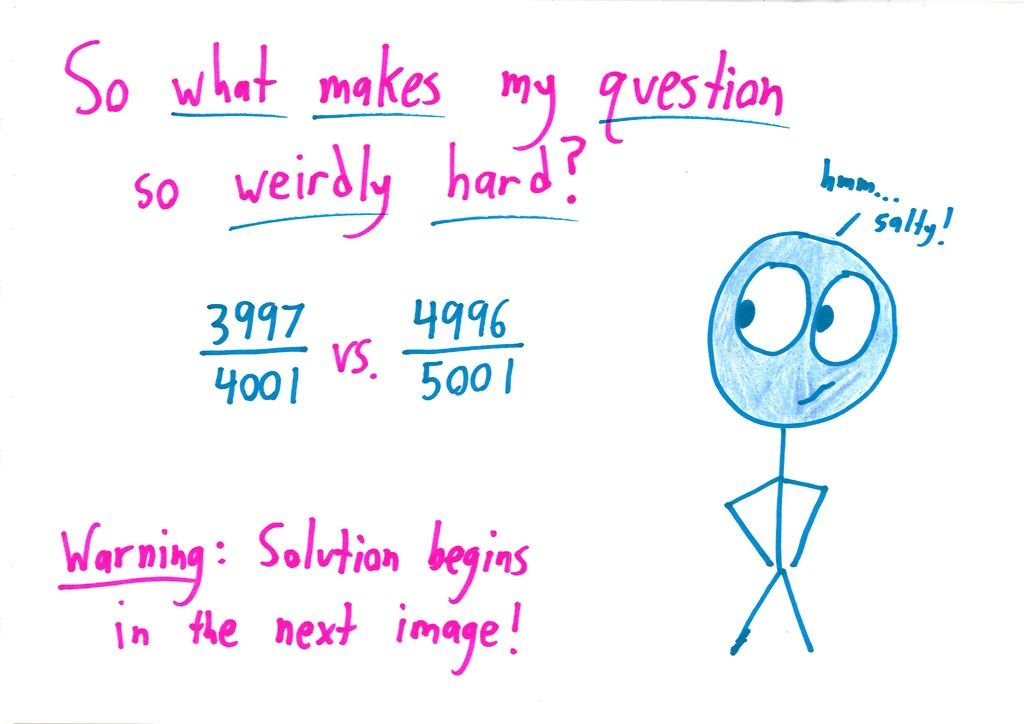
[2] "Which is bigger? 3997/4001 or 4996/5001. Hint: They differ by less than 0.00000005."
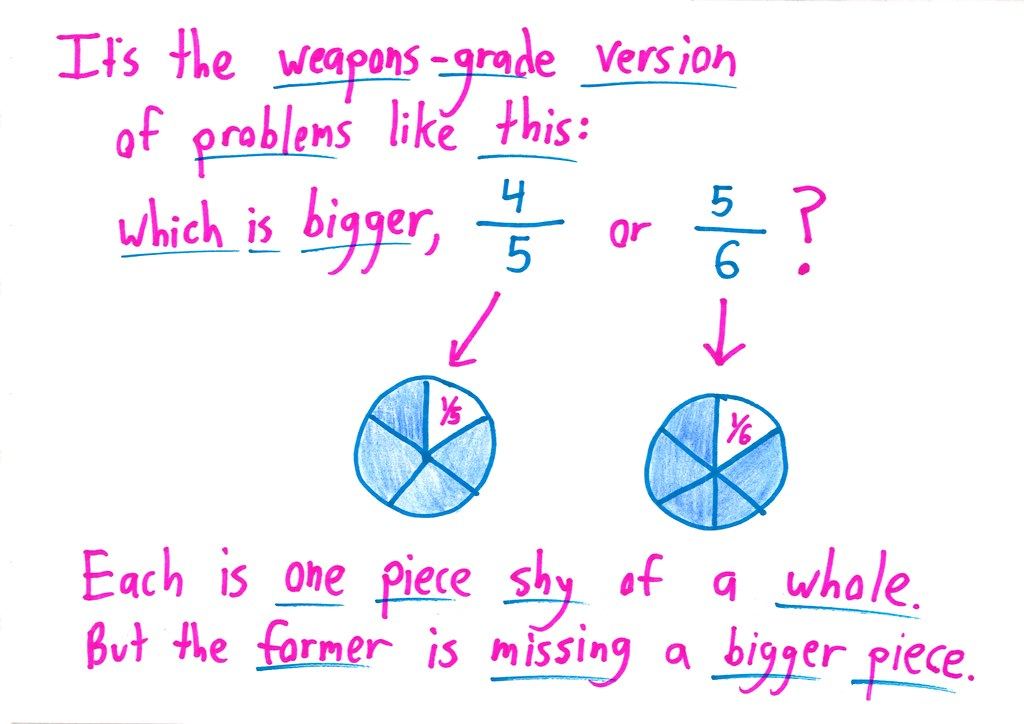
[3] "It's the weapons-grade version of problems like this: which is bigger, 4/5 or 5/6? Each is one piece shy of a whole. But the former is missing a bigger piece."
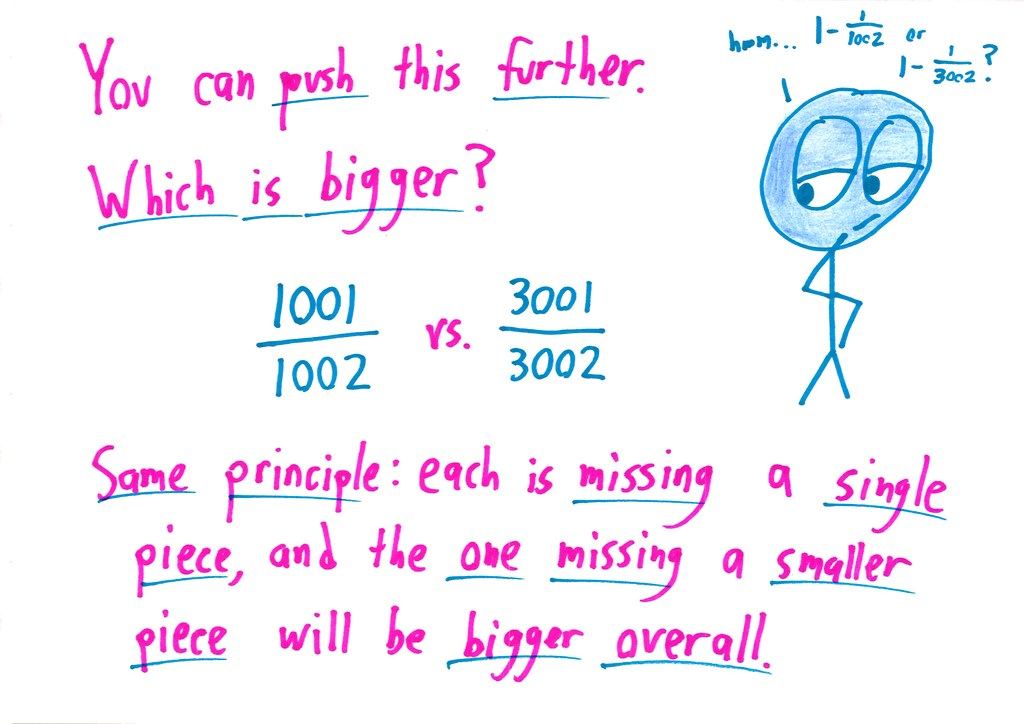
[4] "You can push this further. Which is bigger? 1001/1002 vs. 3001/3002. Same principle: each is missing a single piece, and the one missing a smaller piece will be bigger overall."
[5] "So what makes my question so weirdly hard? Warning: Solution begins in the next image!"
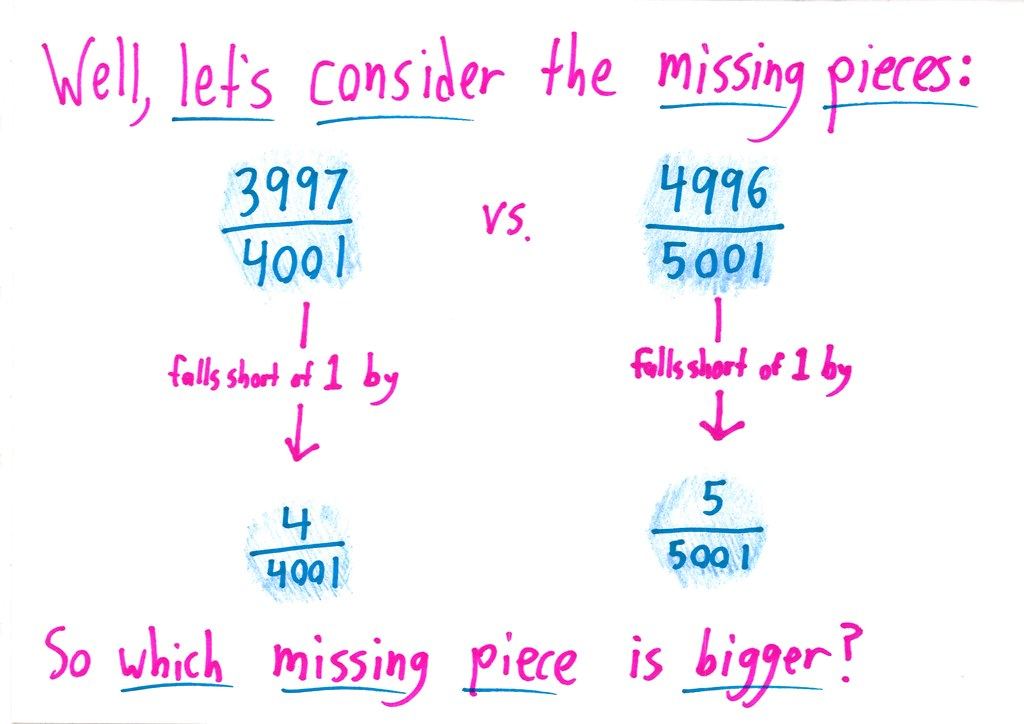
[6] "Well, let's consider the missing pieces: 3997/4001 falls short of 1 by 4/4001; 4996/5001 falls short of 1 by 5/5001. So which missing piece is bigger?"
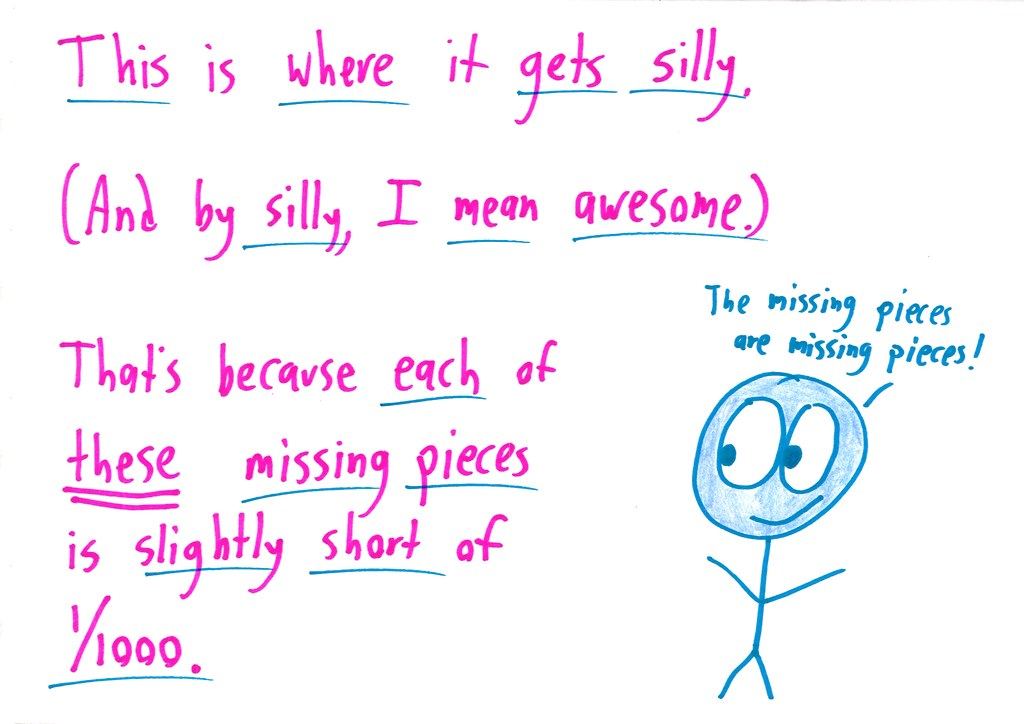
[7] "This is where it gets silly. (And by silly, I mean awesome.) That's because each of these missing pieces is slightly short of 1/1000." ("The missing pieces are missing pieces!")
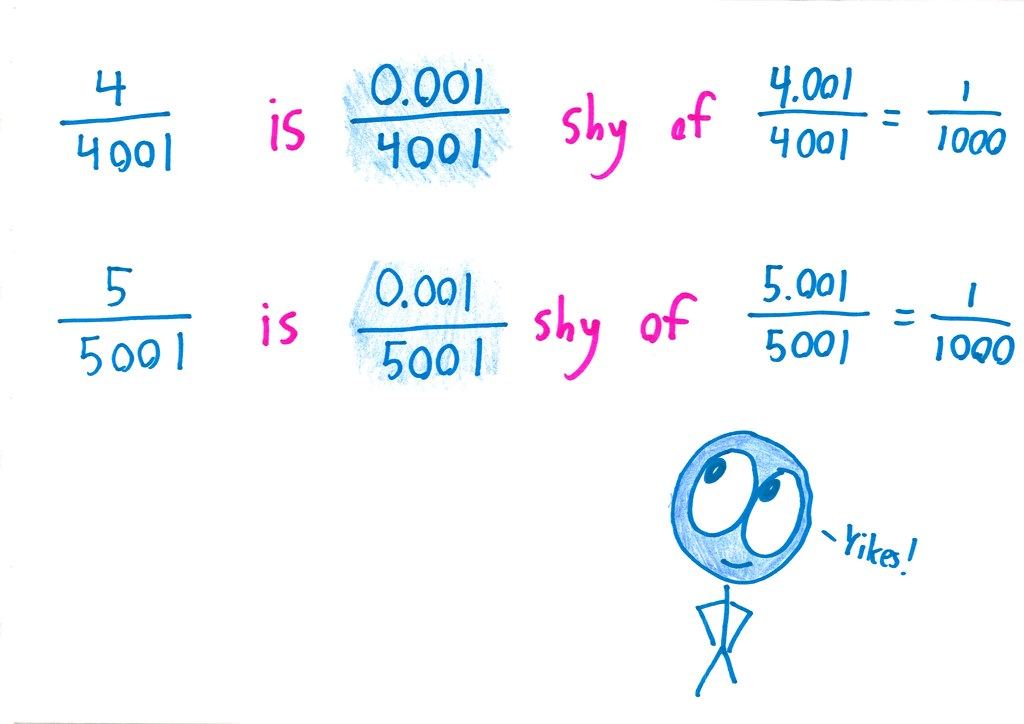
[8] "4/4001 is 0.001/4001 shy of 4.001/4001 = 1/1000. 5/5001 is 0.001/5001 shy of 5.001/5001 = 1/1000." ("Yikes!")
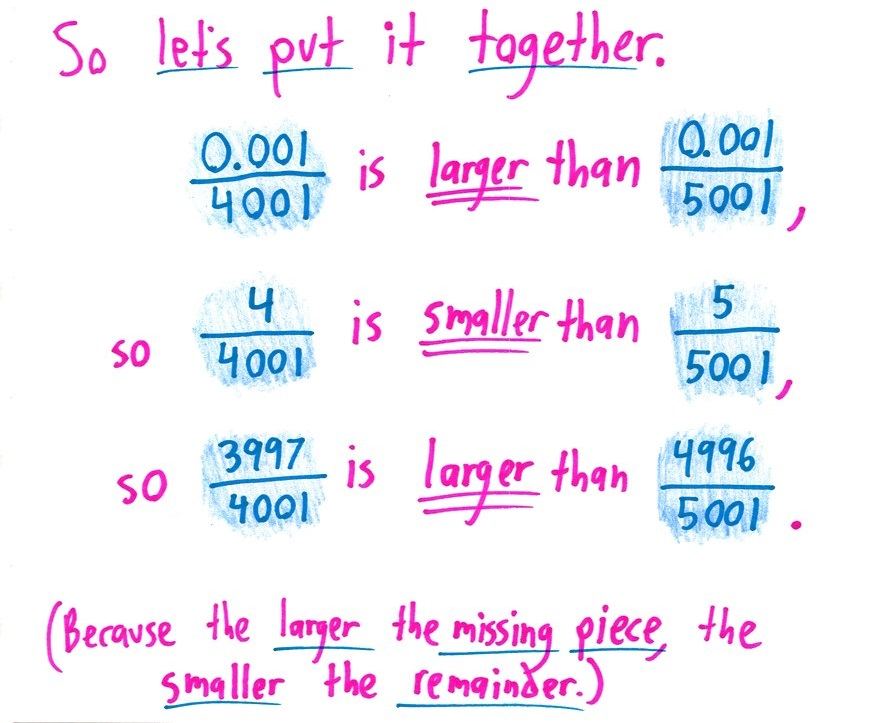
[9] "So let's put it together. 0.001/4001 is larger than 0.001/5001, so 4/4001 is smaller than 5/5001, so 3997/4001 is larger than 4996/5001. (Because the larger the missing piece, the smaller the remainder.)"
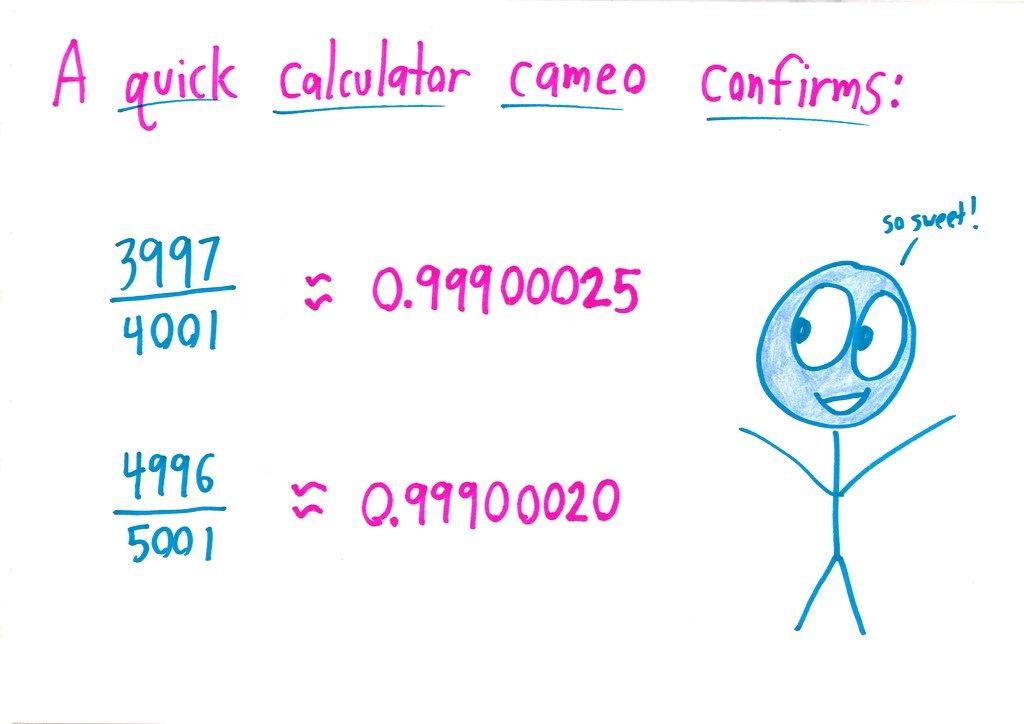
[10] "A quick calculator cameo confirms: 3997/4001 ≈ 0.99900025; 4996/5001 ≈ 0.99900020"
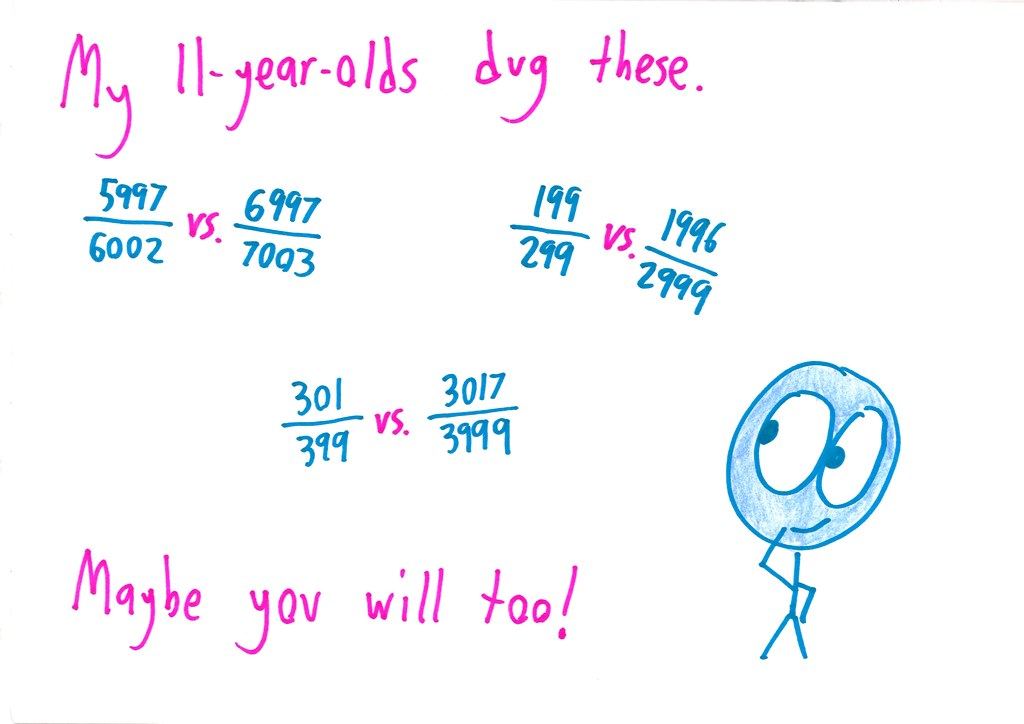
[11] "My 11-year-olds dug these." 5997/6002 vs. 6997/7003 · 199/299 vs. 1996/2999 · 301/399 vs. 3017/3999 "Maybe you will too!"