Epitaphs in the Graveyard of Mathematics
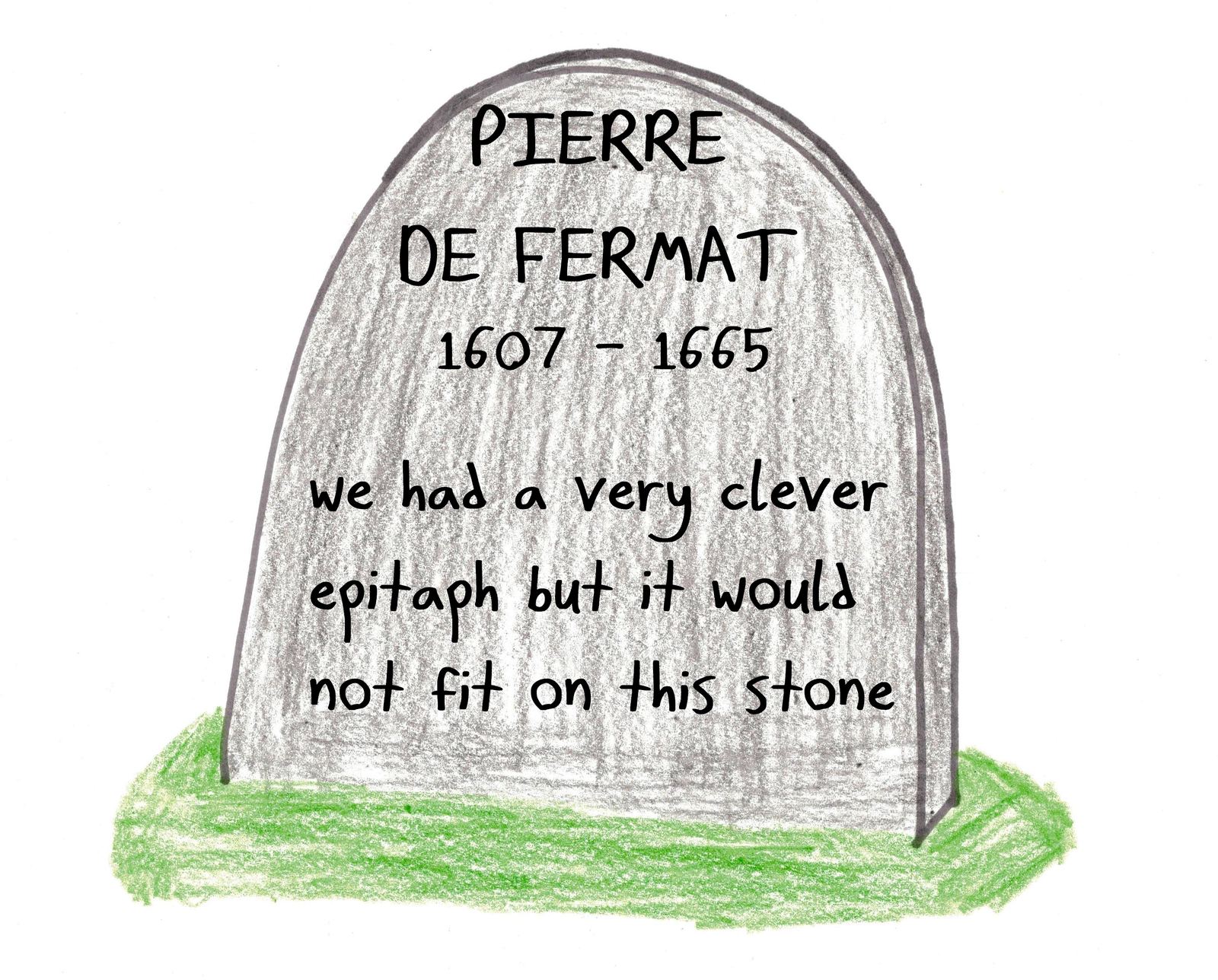
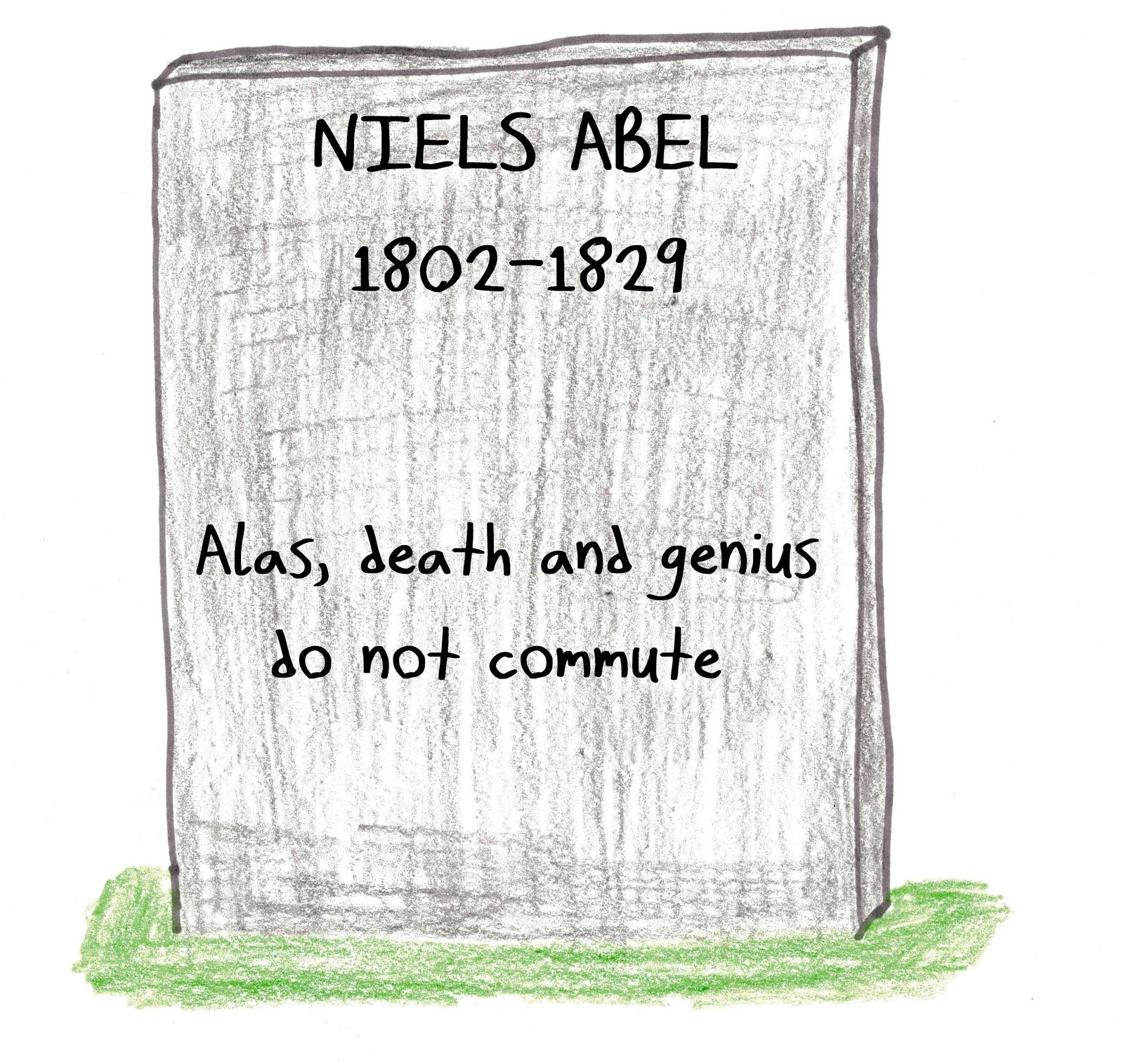
Twelve tombstones from the graveyard of mathematics: Newton at rest stays at rest, Zeno can't quite die, Fermat's epitaph didn't fit, Abel's death and genius do not commute, and more.
Content note: Death theme throughout (gentle); panel 2 says 'murdered'.
Use this cartoon
Free for classrooms, worksheets, slides and other non-commercial use under CC BY-NC 4.0, with credit to Ben Orlin.
Cartoon by Ben Orlin, Math with Bad Drawings. https://cartoons.mathwithbaddrawings.com/2017-11-29-epitaphs-in-the-graveyard-of-mathematics/ (CC BY-NC 4.0)Transcript
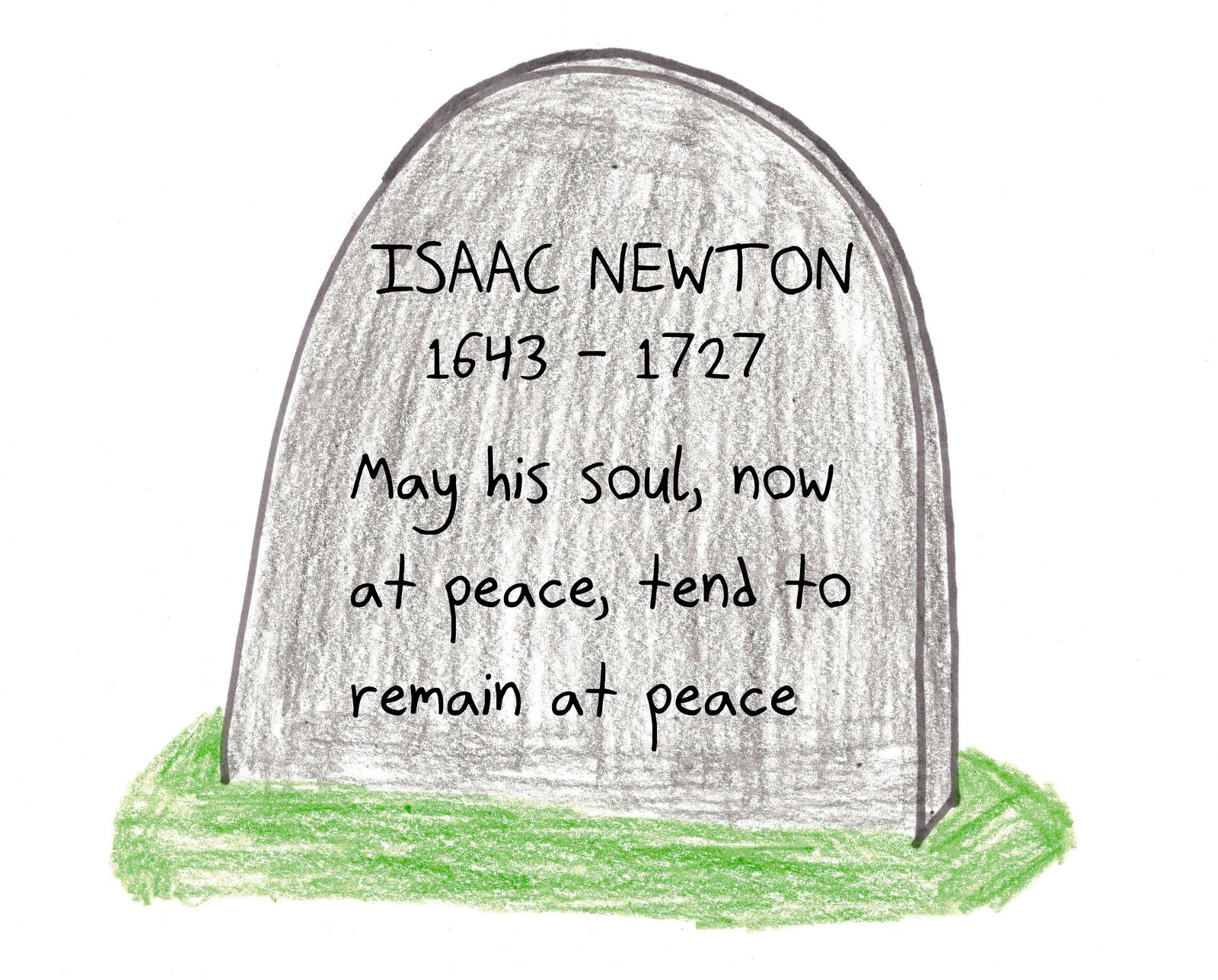
[1] Isaac Newton (1643–1727): 'May his soul, now at peace, tend to remain at peace.'
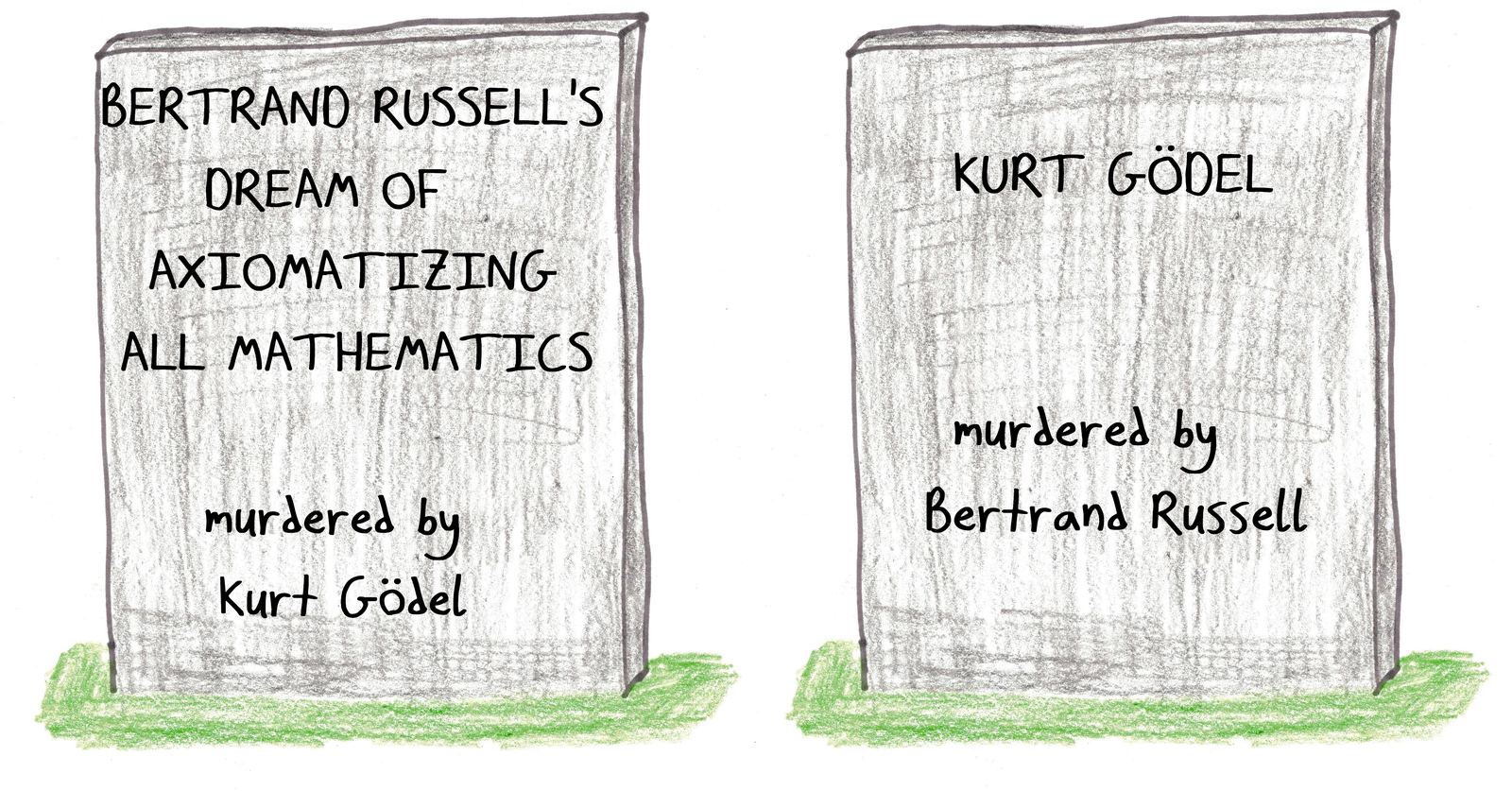
[2] Two graves: 'Bertrand Russell's dream of axiomatizing all mathematics, murdered by Kurt Gödel' and 'Kurt Gödel, murdered by Bertrand Russell'.
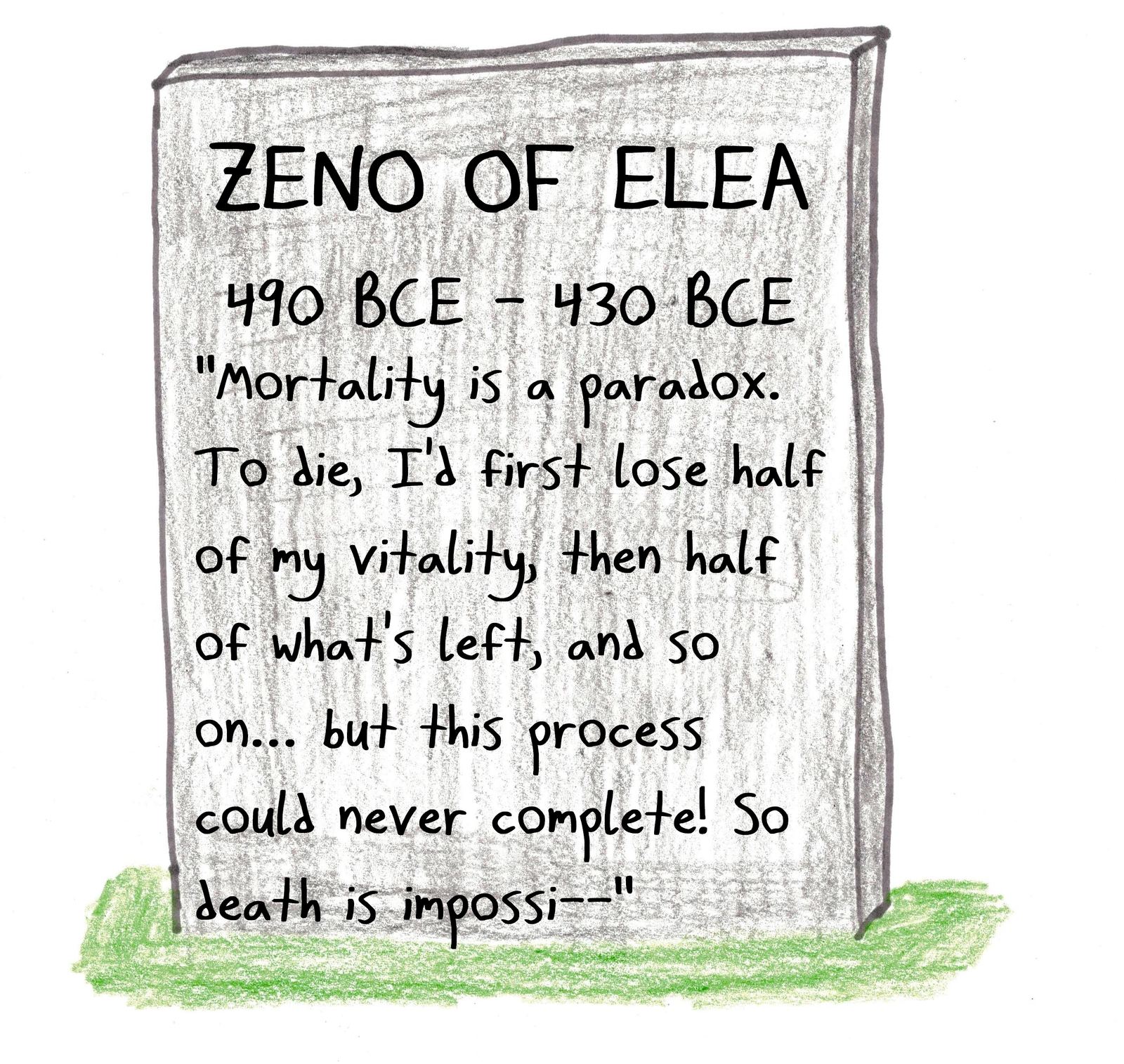
[3] Zeno: 'Mortality is a paradox. To die, I'd first lose half my vitality, then half of what's left… so death is impossi—'
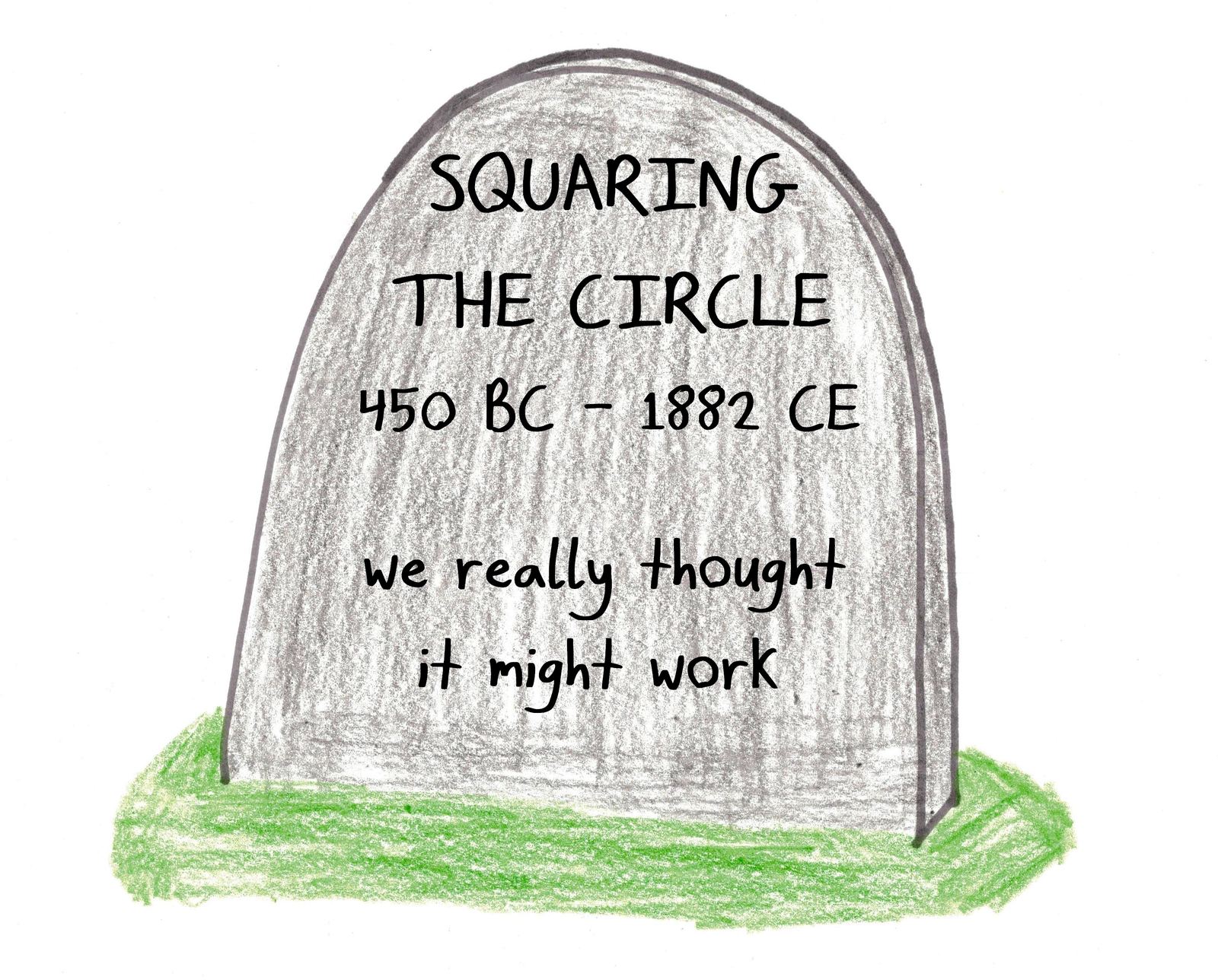
[4] Squaring the Circle (450 BC – 1882 CE): 'We really thought it might work.'
[5] Fermat: 'We had a very clever epitaph but it would not fit on this stone.'
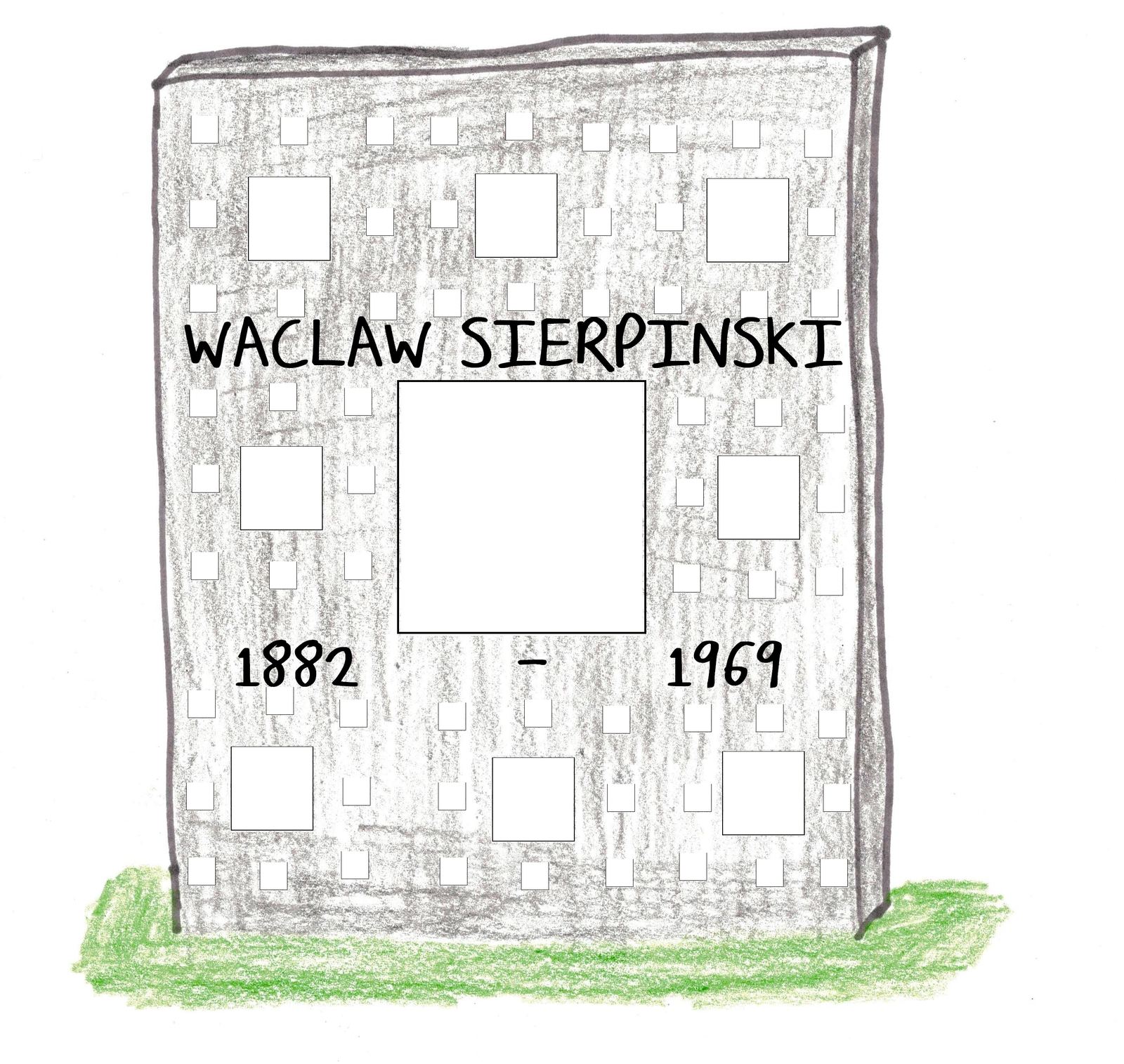
[6] Sierpiński's tombstone, carved into a Sierpiński carpet.
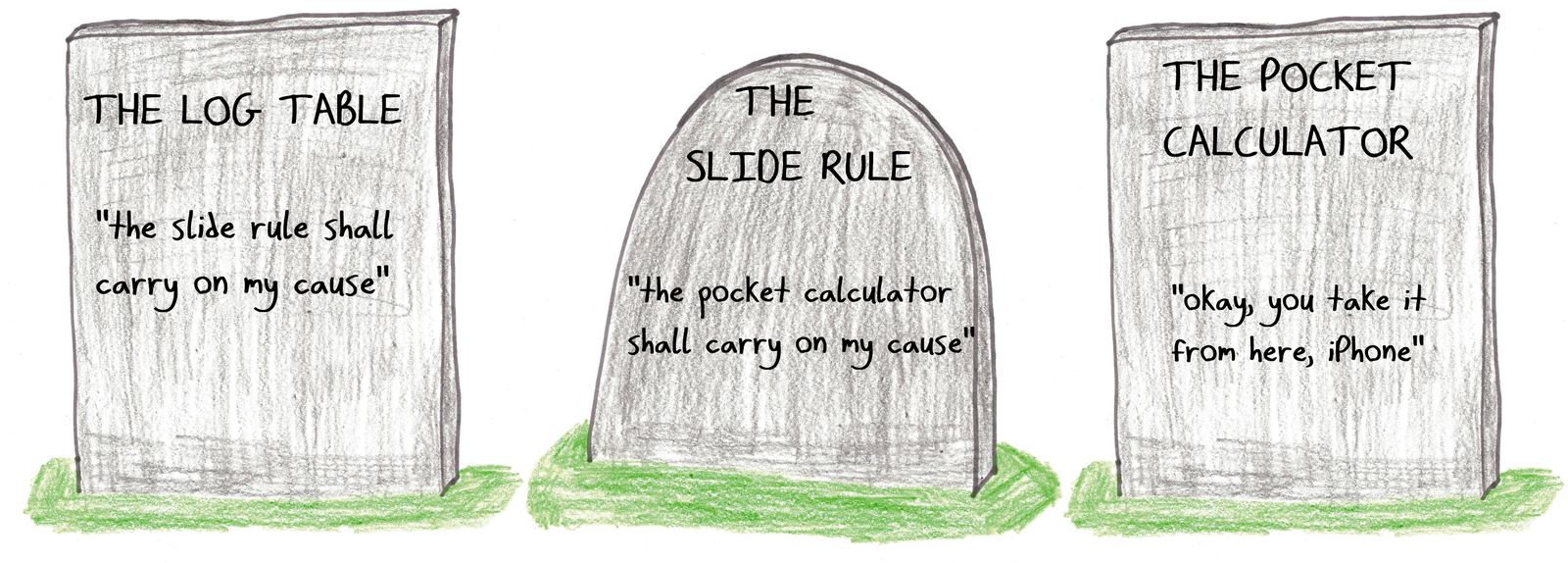
[7] Graves for the log table, slide rule and pocket calculator, each passing the torch, the last to the iPhone.
[8] Niels Abel (1802–1829): 'Alas, death and genius do not commute.'
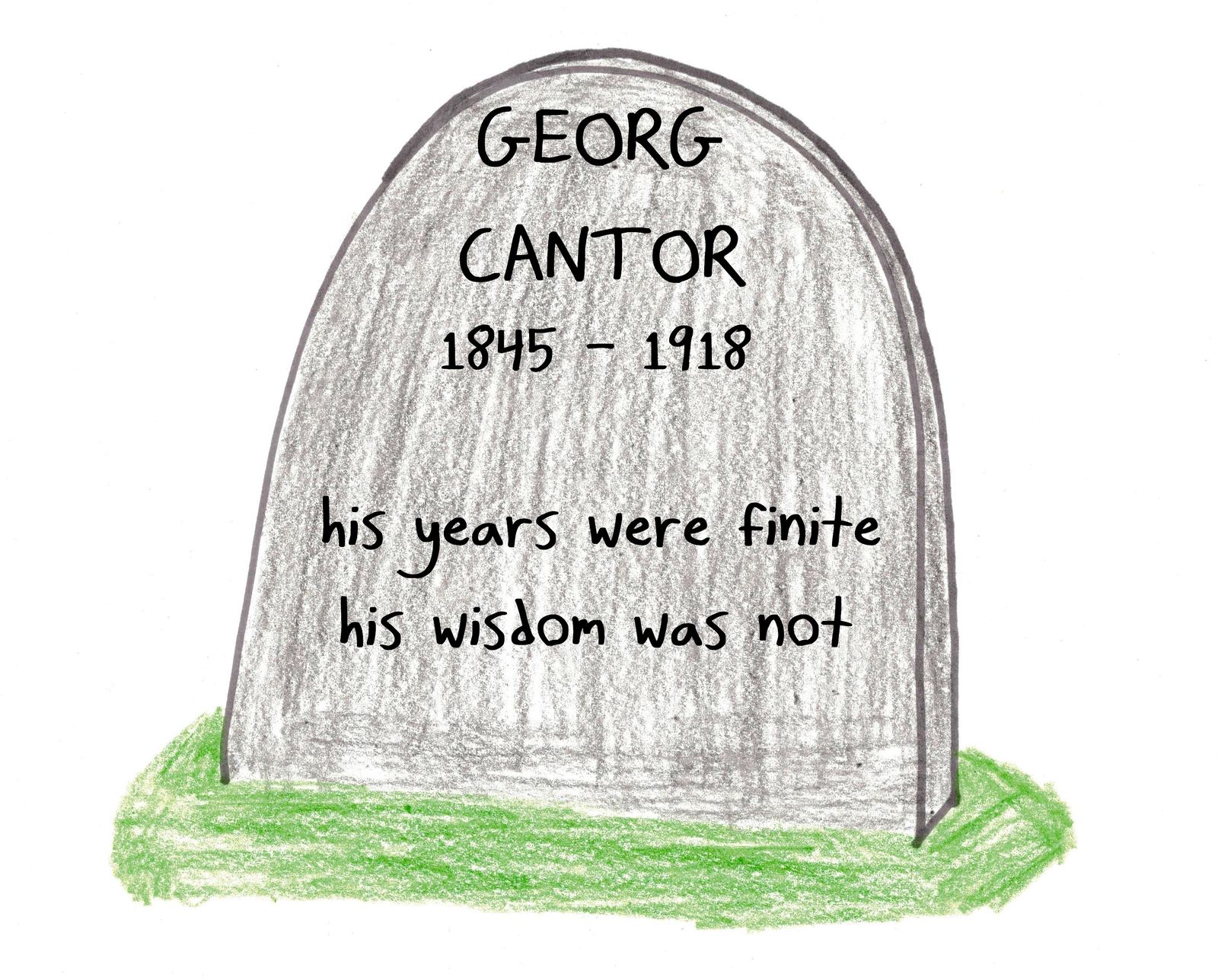
[9] Georg Cantor: 'His years were finite; his wisdom was not.'
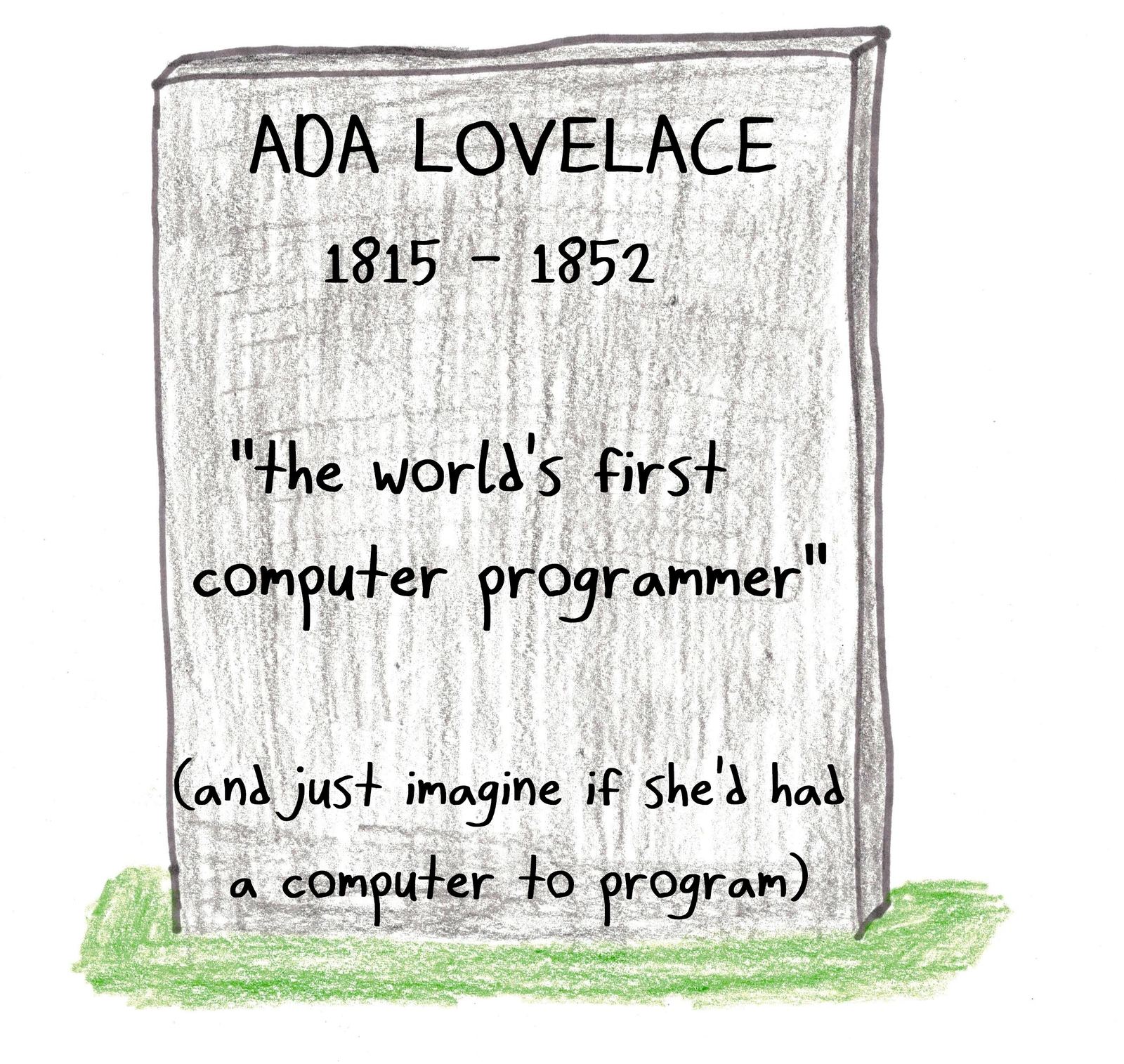
[10] Ada Lovelace: 'the world's first computer programmer' (and just imagine if she'd had a computer to program).
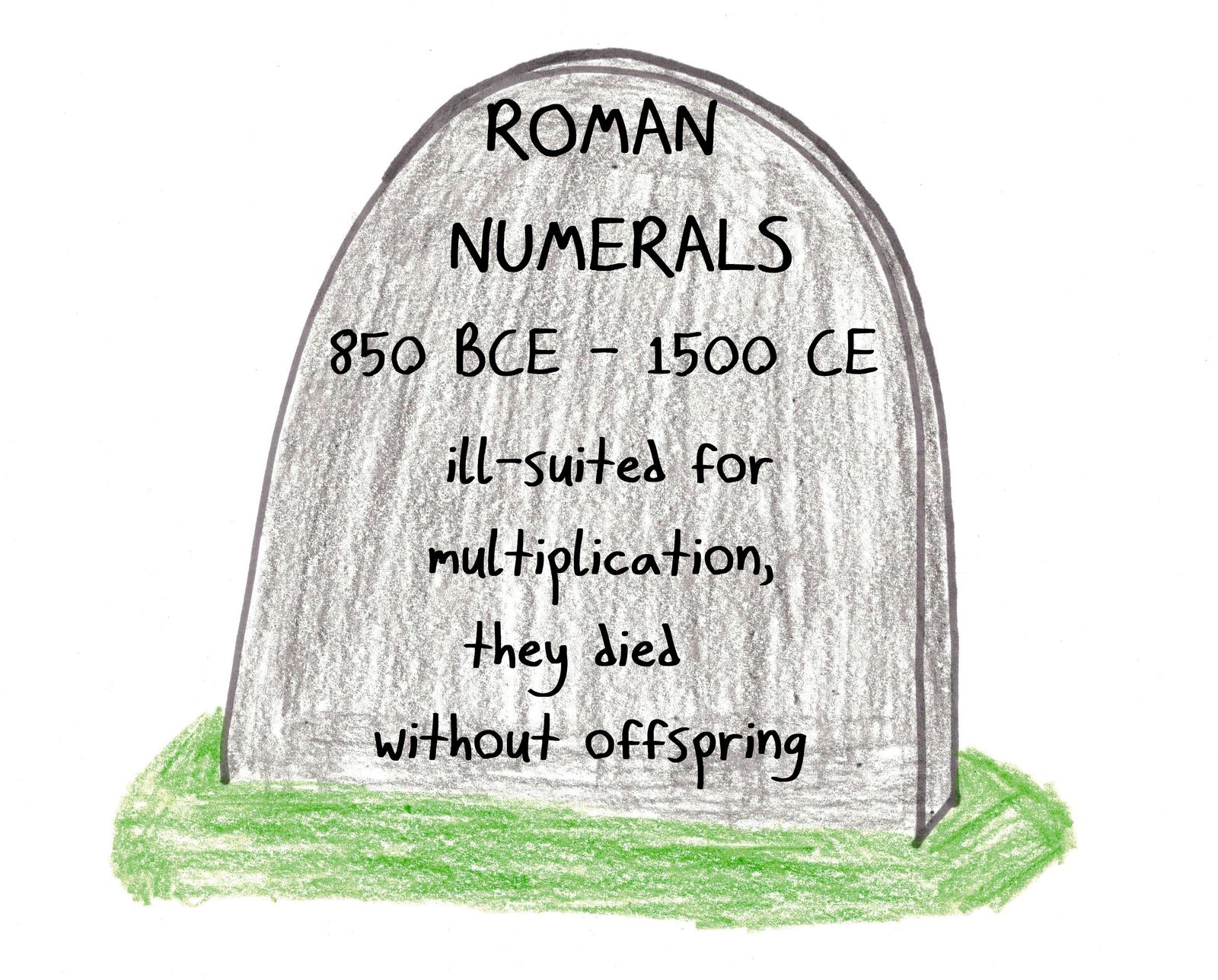
[11] Roman Numerals (850 BCE – 1500 CE): 'Ill-suited for multiplication, they died without offspring.'
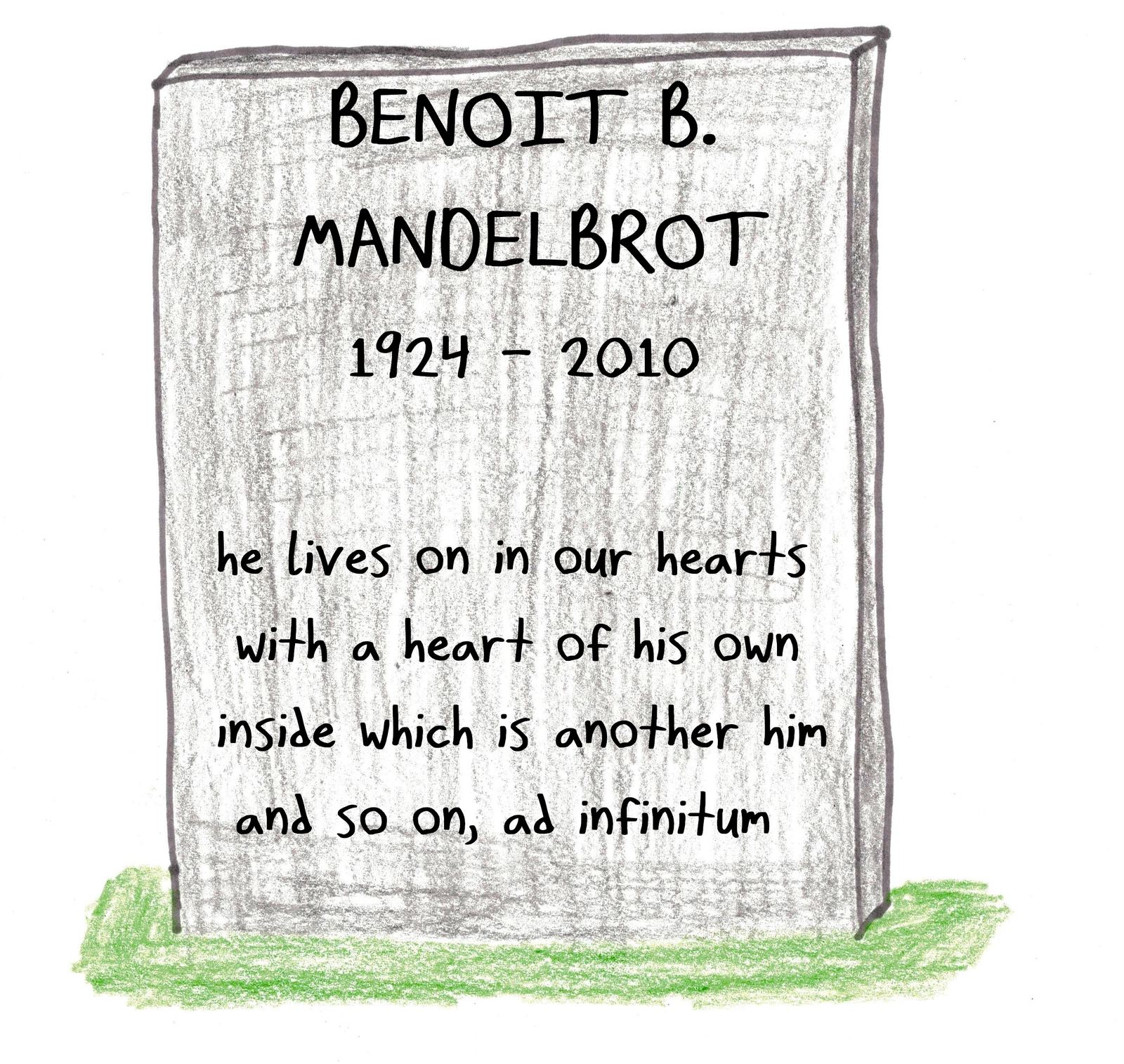
[12] Mandelbrot: 'He lives on in our hearts, with a heart of his own, inside which is another him, and so on, ad infinitum.'