Naive Platonism, in Six Steps
A six-step philosophical journey that starts and ends at naive Platonism, by way of a philosopher's objections and pragmatism.
Content note: Mild language ('friggin'); religious reference.
Use this cartoon
Free for classrooms, worksheets, slides and other non-commercial use under CC BY-NC 4.0, with credit to Ben Orlin.
Cartoon by Ben Orlin, Math with Bad Drawings. https://cartoons.mathwithbaddrawings.com/2025-07-14-naive-platonism-in-six-steps/ (CC BY-NC 4.0)Transcript
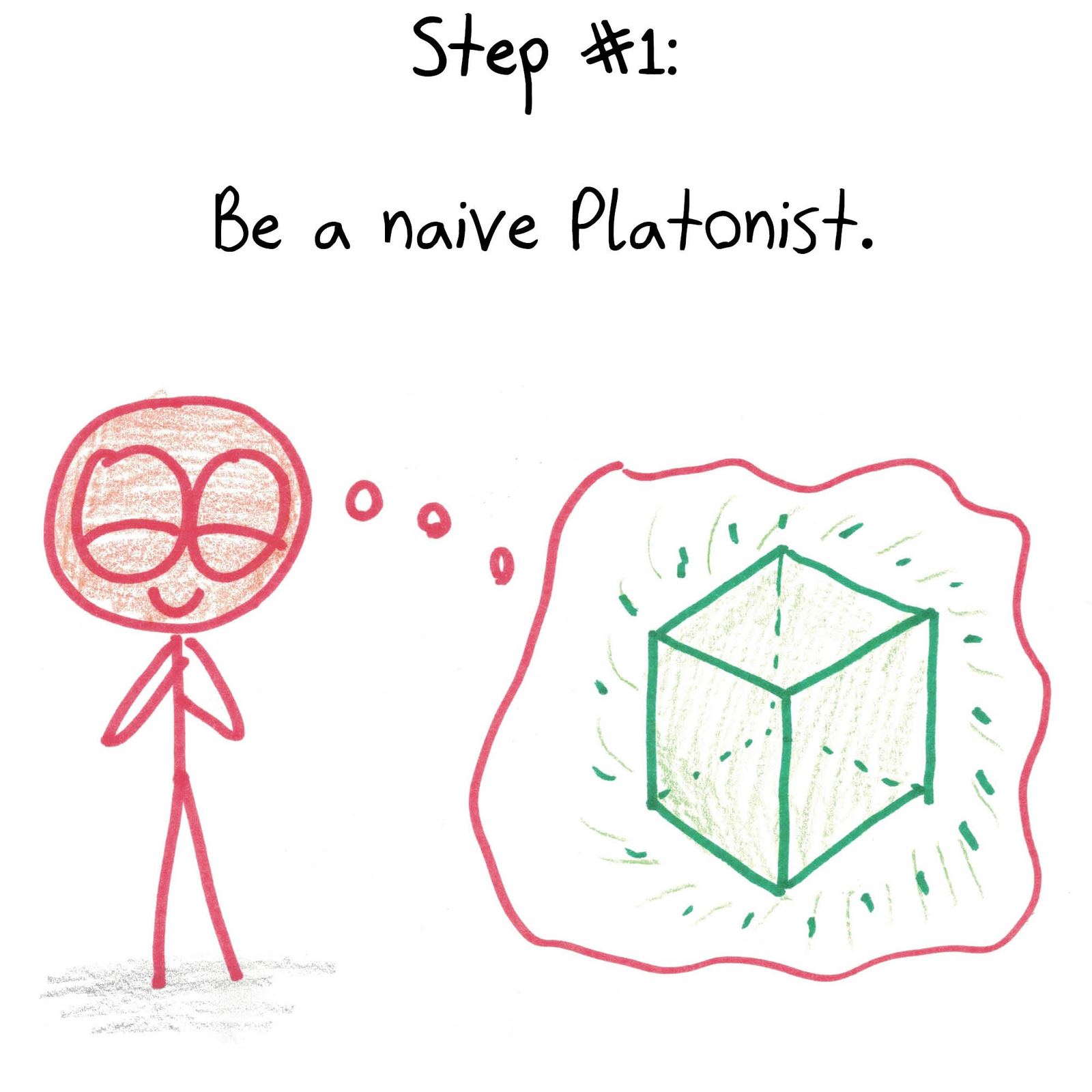
[1] Step #1: Be a naive Platonist. [dreamily imagining a glowing perfect cube]
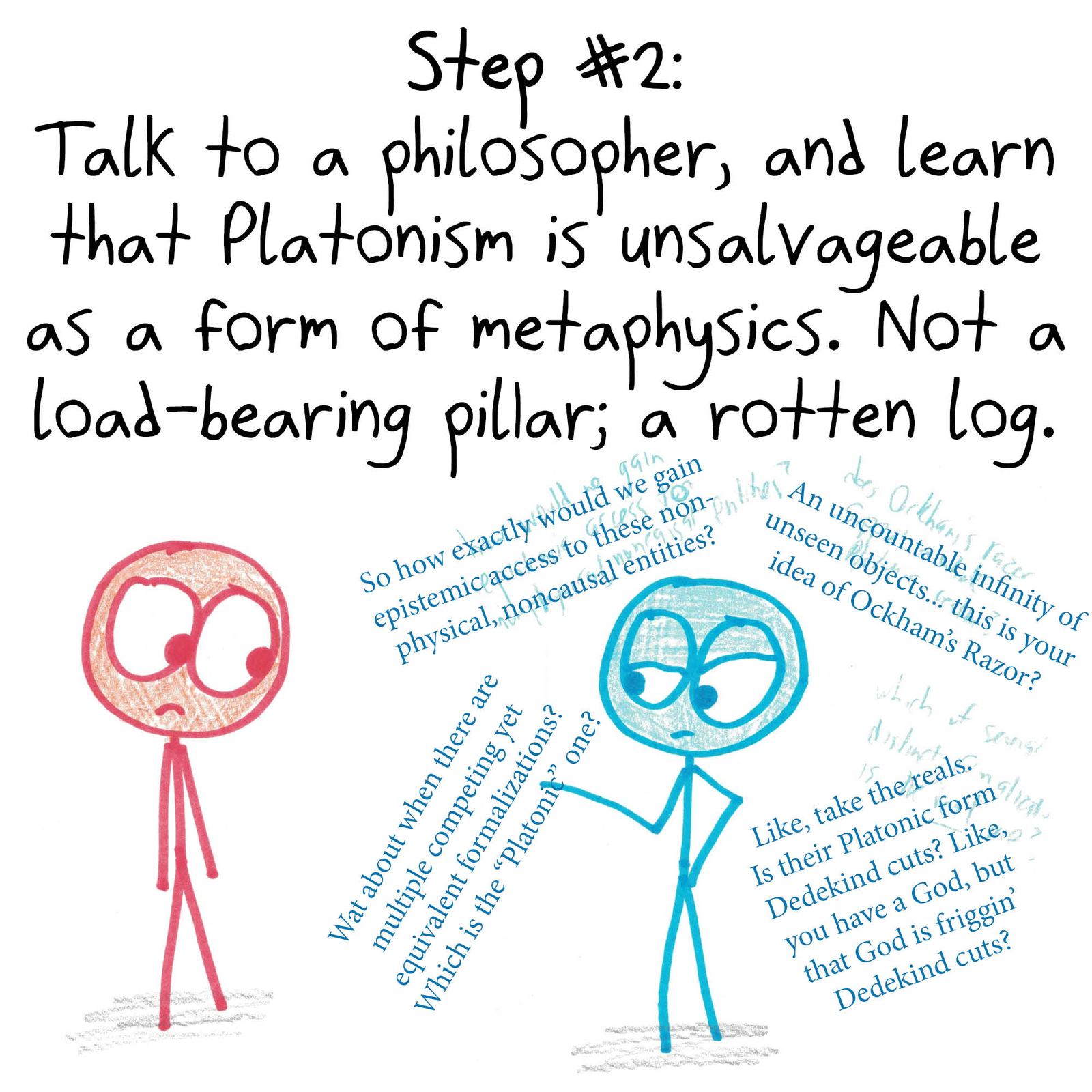
[2] Step #2: Talk to a philosopher, and learn that Platonism is unsalvageable as a form of metaphysics. Not a load-bearing pillar; a rotten log. [Philosopher: "So how exactly would we gain epistemic access to these non-physical, noncausal entities?" "What about when there are multiple competing yet equivalent formalizations? Which is the 'Platonic' one?" "An uncountable infinity of unseen objects… this is your idea of Ockham's Razor?" "Like, take the reals. Is their Platonic form Dedekind cuts? Like, you have a God, but that God is friggin' Dedekind cuts?"]
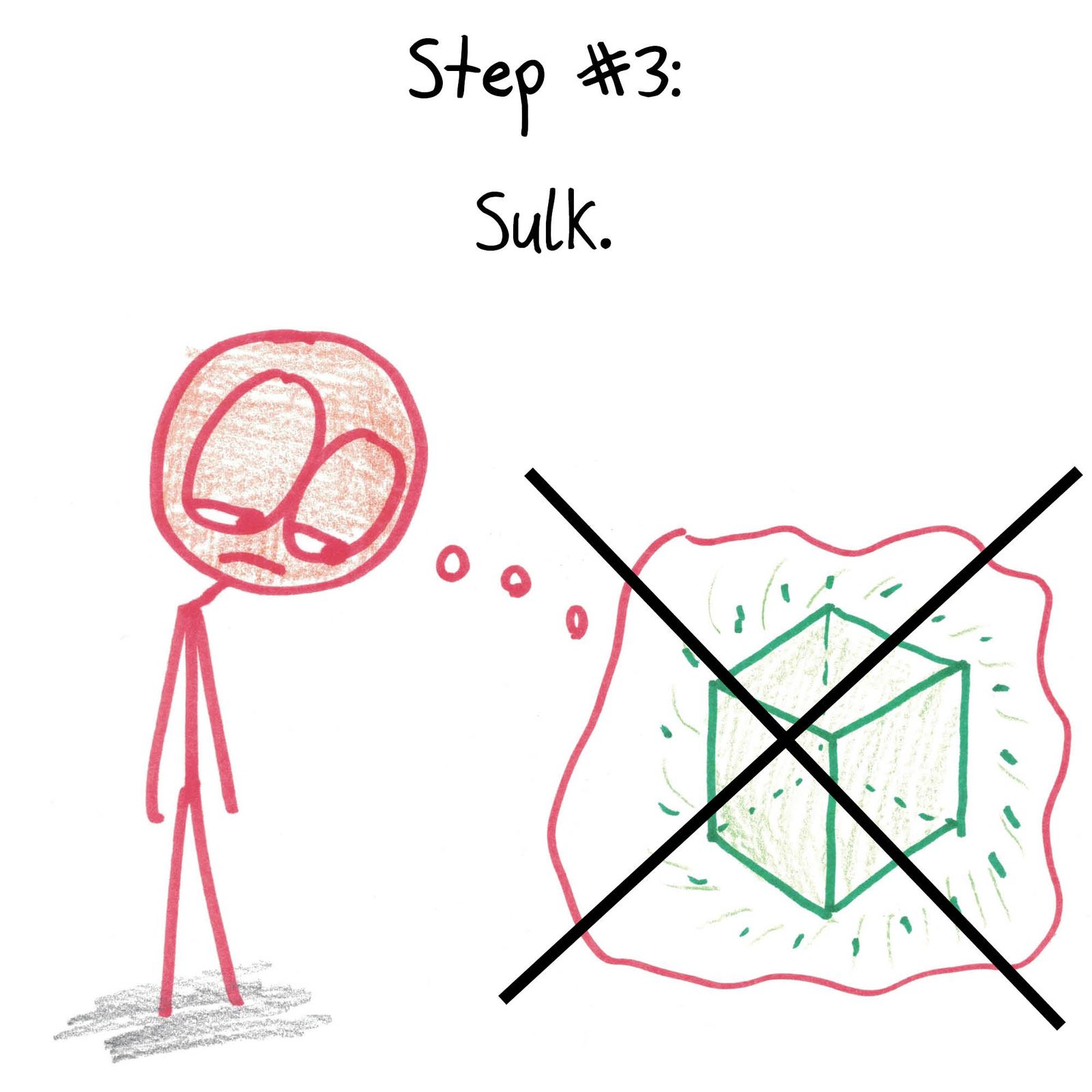
[3] Step #3: Sulk. [the cube crossed out]
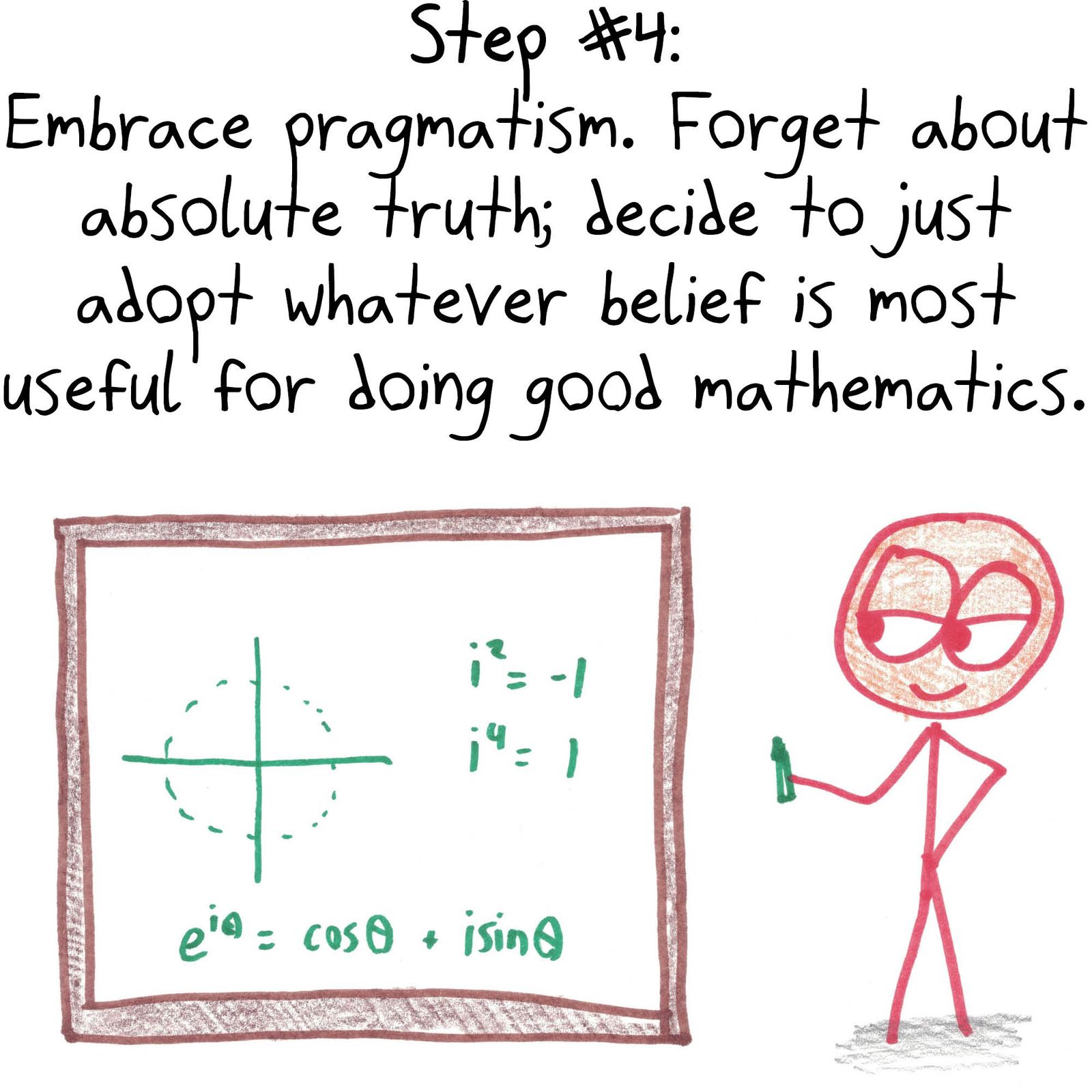
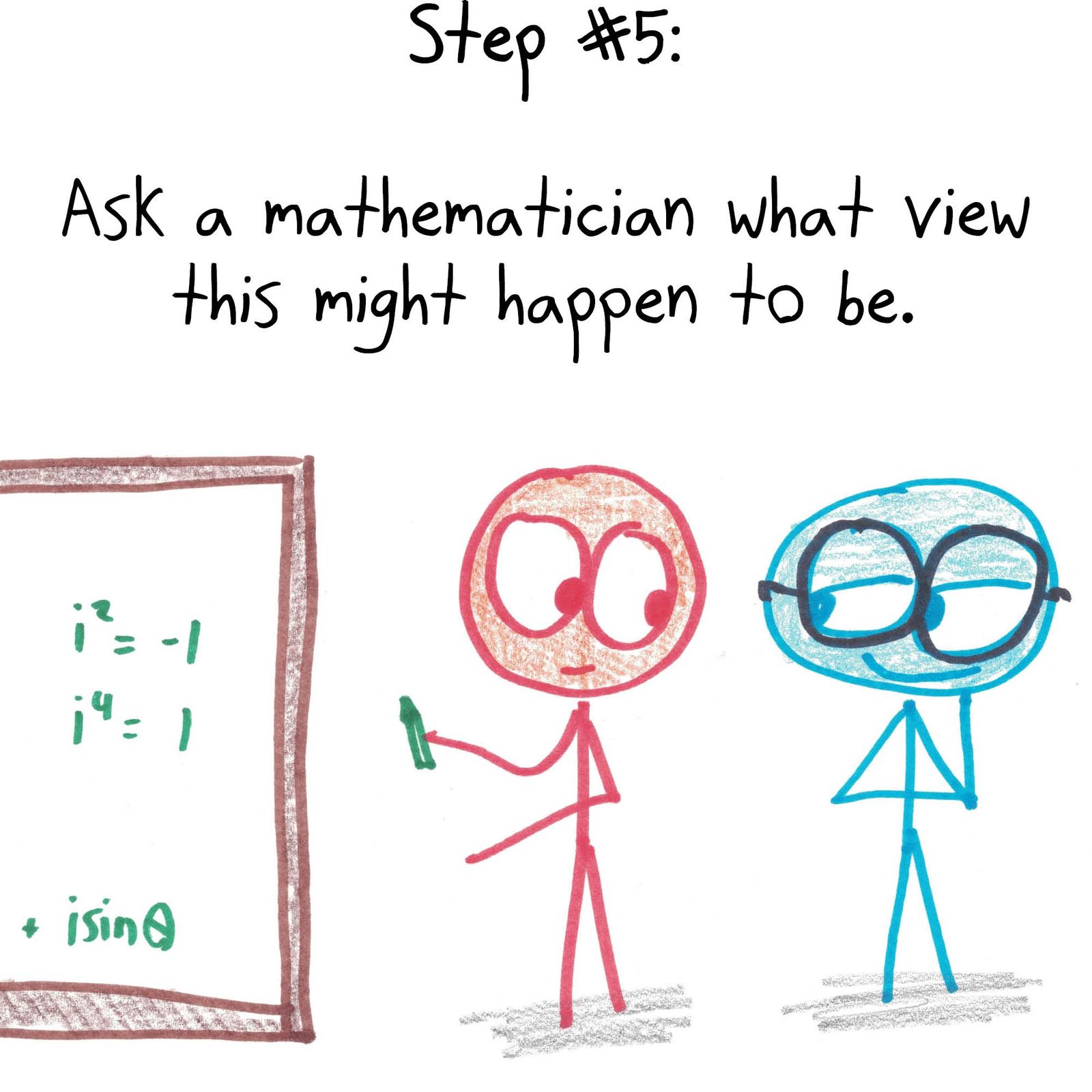
[4] Step #4: Embrace pragmatism. Forget about absolute truth; decide to just adopt whatever belief is most useful for doing good mathematics. [at a board: i² = −1, i⁴ = 1, e^(iθ) = cos θ + i sin θ]
[5] Step #5: Ask a mathematician what view this might happen to be.
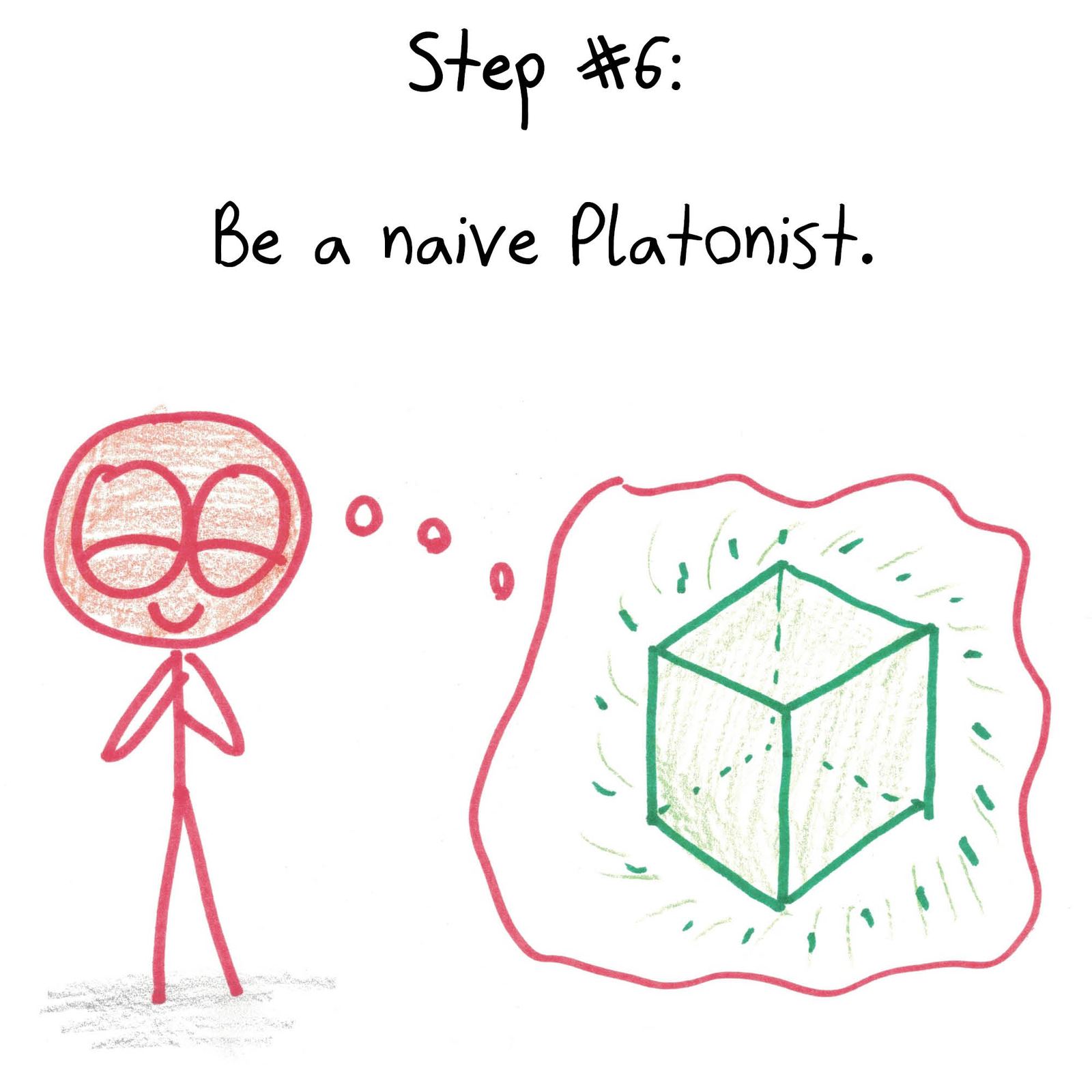
[6] Step #6: Be a naive Platonist.